
What's Happening?
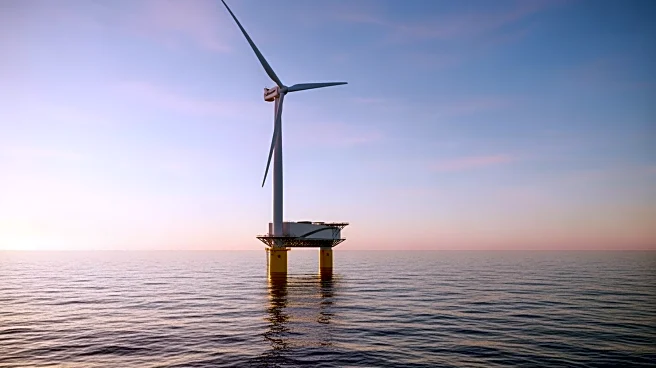
Japan's Goto Floating Wind Farm has commenced commercial operations as of January 5, marking a significant milestone in the country's renewable energy expansion efforts. This project is notable for being
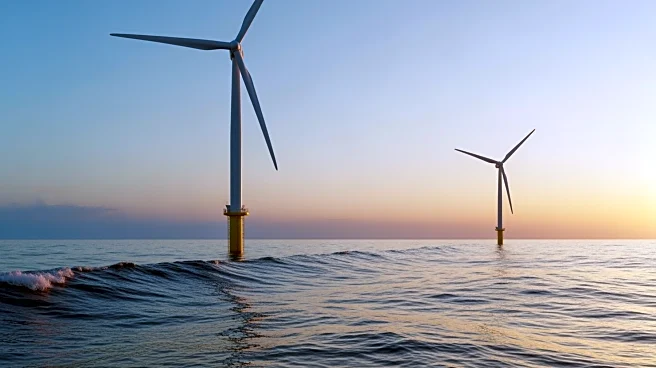
Japan's first floating wind farm and one of the few globally to utilize floating technology. The wind farm employs a novel hybrid spar-type floater, combining a steel upper section with a concrete lower section, designed by TODA Corporation. This innovative design is the first of its kind to be commercially applied. The Goto project, located near Nagasaki, has been in development since 2022 and is part of Japan's broader strategy to achieve 10 GW of offshore wind projects by 2030, with floating wind turbines expected to contribute at least 15 GW by 2040. The project features eight Hitachi 2.1MW turbines and is situated approximately 7 km offshore from Sakiyama Fishing Port on Fukue Island, in water depths of 130-140 meters.
Why It's Important?
The launch of the Goto Floating Wind Farm is a critical step for Japan's renewable energy sector, particularly in overcoming the geographical challenges that limit traditional fixed-bottom wind turbines. By advancing floating wind technology, Japan aims to significantly increase its offshore wind capacity, contributing to its goal of 45 GW by 2040. This development not only supports Japan's energy transition but also aligns with global efforts to reduce carbon emissions and combat climate change. The project is expected to stimulate local economies by supplying power to local providers, adhering to Japan's principle of local energy production for local consumption. The success of this project could pave the way for further innovations and investments in floating wind technology, potentially influencing global renewable energy strategies.
What's Next?
As the Goto Floating Wind Farm begins operations, it sets a precedent for future projects in Japan and potentially worldwide. The success of this project may encourage further investment and development in floating wind technology, both domestically and internationally. Japan's government, through its Ministry of Economy, Trade and Industry and Ministry of Land, Infrastructure, Transport and Tourism, is likely to continue supporting such initiatives to meet its ambitious renewable energy targets. The project's progress will be closely monitored by stakeholders in the energy sector, as it could influence policy decisions and investment strategies in renewable energy infrastructure.