








What's Happening?
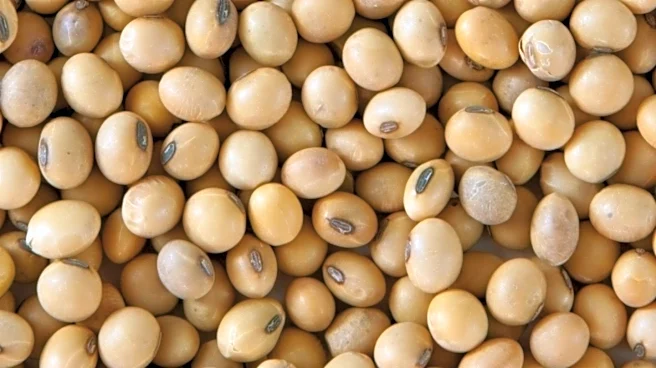
AgRural has released its first assessment for the 2026/27 Brazilian growing season, predicting a 0.9% increase in soybean acreage, which translates to an additional 443,000 hectares, bringing the total to 49.0 million hectares. This marks the 20th consecutive
year of growth in soybean acreage in Brazil, but it is the smallest increase in two decades. The modest growth is attributed to several economic challenges faced by Brazilian farmers, including low profitability, high input costs, increased indebtedness, low commodity prices, and limited access to credit. Additionally, the developing El Nino weather phenomenon is expected to introduce further uncertainty, potentially affecting planting conditions across different regions of Brazil.
Why It's Important?
The predicted increase in soybean acreage, albeit minimal, is significant as it reflects the ongoing challenges within the Brazilian agricultural sector. The economic difficulties faced by farmers could have broader implications for global agricultural markets, particularly in the U.S., which competes with Brazil in soybean production. The potential impact of El Nino on planting conditions could further complicate the situation, affecting global supply chains and commodity prices. This development is crucial for stakeholders in the agricultural industry, including policymakers, traders, and farmers, as it may influence future market dynamics and trade relations.
What's Next?
As the 2026/27 growing season approaches, stakeholders will closely monitor the impact of El Nino on Brazilian agriculture. The weather phenomenon could lead to above-average rainfall in southern Brazil, potentially hindering spring planting, while central and northern regions may experience delays due to dry conditions. These factors could affect the overall yield and quality of the soybean crop, influencing global supply and pricing. Additionally, the economic challenges faced by Brazilian farmers may prompt discussions on policy interventions or support mechanisms to stabilize the agricultural sector.