




What's Happening?
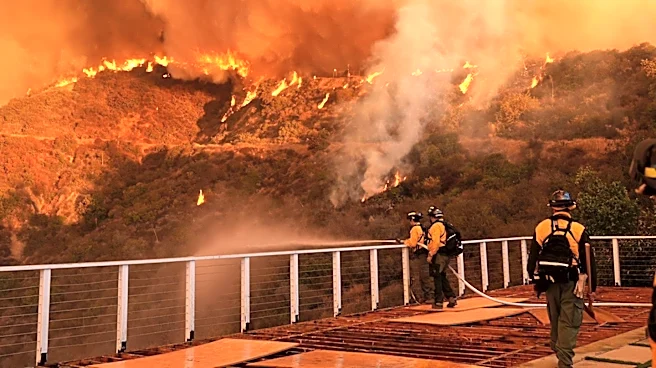
Southern California is facing a critical debate over wildfire prevention strategies, particularly in areas where residential communities meet wildlands. A recent meeting of the Conejo Open Space Conservation Agency (COSCA) highlighted a conflict between
Ventura County Fire Department officials, who advocate for additional fuel reduction in the wildland-urban interface, and COSCA Administrator Brian Stark, who expressed concerns that clearing chaparral could lead to its replacement by more flammable weedy grasses. This disagreement reflects a broader question about whether existing rules and philosophies governing wildfire protection are adequately coordinated. Homeowners in designated fire-hazard areas are legally required to maintain defensible space around their properties, facing inspections and potential charges for non-compliance. Simultaneously, these homeowners are experiencing significant increases in insurance premiums, raising questions about the management of adjoining public lands and whether environmental concerns are overriding effective fire management practices.
Why It's Important?
This collision of wildfire prevention rules and philosophies has significant implications for public safety, property values, and environmental policy in Southern California. Inconsistent approaches between fire agencies, open-space managers, and homeowners can create vulnerabilities, potentially increasing the risk of catastrophic fires. Homeowners bear the financial burden of compliance and rising insurance costs, leading to frustration when they perceive that adjacent public lands are not managed with the same urgency. The debate also touches on the delicate balance between preserving native habitats and protecting communities. If not resolved, these conflicting strategies could undermine overall wildfire resilience efforts, leading to greater losses during fire events and eroding public trust in land management authorities. The effectiveness of wildfire mitigation hinges on a unified, science-backed approach that considers both ecological health and human safety.
What's Next?
As Southern California enters its high-risk wildfire season, characterized by heat, dry vegetation, and Santa Ana winds, the need for a cohesive strategy becomes more urgent. The ongoing debate suggests that further discussions and scientific evaluations are necessary to reconcile differing viewpoints on fuel management. Stakeholders, including fire departments, open-space agencies, environmental groups, and homeowner associations, will likely need to engage in collaborative efforts to develop integrated solutions. This could involve re-examining existing policies, conducting new research on the efficacy of various fuel reduction methods in specific terrains, and potentially adjusting regulations for both private and public lands. The financial pressures on homeowners, particularly regarding insurance, may also prompt calls for policy interventions or greater transparency in risk assessment and mitigation efforts across all land types.
Beyond the Headlines
The conflict over wildfire management in Southern California points to deeper systemic challenges in how society interacts with natural landscapes, especially in a changing climate. It highlights the tension between conservation ethics, which prioritize native ecosystems, and the immediate need for hazard reduction to protect human lives and property. This situation also brings to light the economic externalities of wildfire risk, where individual homeowners bear increasing costs while the management of public lands, which can significantly influence that risk, is subject to different priorities and funding mechanisms. The long-term implications include potential shifts in land use planning, increased pressure for development in less fire-prone areas, and a re-evaluation of how communities are designed and built in fire-prone regions. Ultimately, finding a sustainable path forward requires a holistic understanding of fire ecology, community resilience, and equitable risk sharing.