
What's Happening?
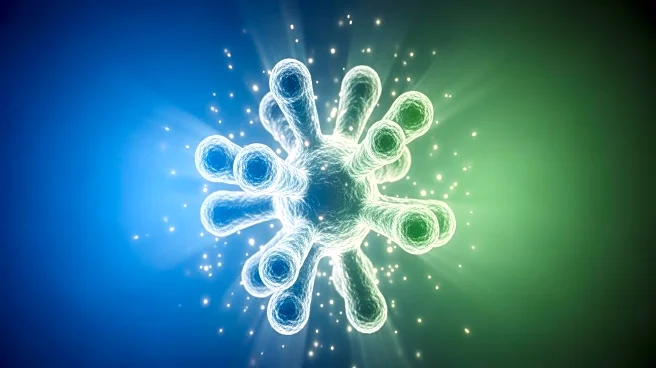
Prof. Yifat Merbl from the Weizmann Institute of Science has been recognized for her groundbreaking discovery of a new layer of the human immune system. Her research revealed that the proteasome, a cellular
recycling machinery, can cleave proteins into antimicrobial peptides under certain conditions. These peptides help the body fight infections, offering new therapeutic avenues for patients with weakened immunity, such as cancer patients or organ transplant recipients. This discovery could lead to innovative treatments based on natural immune compounds, addressing the growing issue of antibiotic resistance. Merbl's work was highlighted in Nature's annual list of influential scientists, despite her lab being destroyed in an Iranian missile strike earlier this year.
Why It's Important?
Merbl's discovery is significant in the context of rising antibiotic resistance, which poses a major threat to global health. By identifying natural antimicrobial peptides, her research opens the door to developing safer, personalized therapies that leverage the body's own defenses. This could revolutionize treatment for patients with compromised immune systems, reducing reliance on traditional antibiotics and potentially curbing the spread of resistant bacteria. The recognition of her work underscores the importance of scientific innovation in addressing critical health challenges and highlights Israel's role in advancing global medical research.
What's Next?
Following the destruction of her lab, Merbl and her team are focused on rebuilding and continuing their research. The next steps involve expanding the catalog of antimicrobial peptides and exploring their therapeutic applications. This could lead to collaborations with pharmaceutical companies to develop new treatments. Additionally, the Weizmann Institute's commitment to advancing scientific knowledge suggests ongoing support for Merbl's work, potentially attracting further funding and international partnerships to accelerate the development of these therapies.