






What's Happening?
The U.S. Coast Guard has detained 11 Mexican fishers for illegally harvesting 1,350 pounds of red snapper and nine sharks in U.S. federal waters. The interdiction occurred after the fishers were discovered operating north of the Maritime Boundary Line
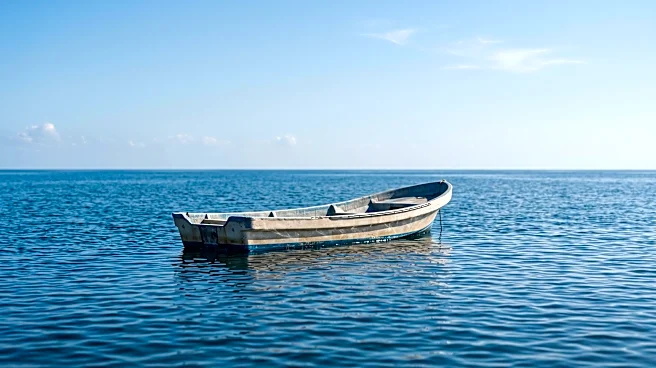
on February 6. They were using three 'lanchas,' which are small, fast boats often employed to quickly cross into U.S. waters, illegally catch fish, and then return to Mexico. The Coast Guard seized the fishers' catch and gear, and the individuals were subsequently turned over to U.S. Customs and Border Protection for processing. This incident follows another recent capture of a lancha crew that had illegally taken 200 pounds of fish off the Texas coast, indicating a pattern of such illicit activities in the Gulf of Mexico.
Why It's Important?
Illegal, unreported, and unregulated (IUU) fishing poses a significant threat to the sustainability of marine ecosystems and the economic stability of legitimate U.S. fishing industries. The illegal harvesting of red snapper, a highly valued species, directly impacts the quotas and livelihoods of American fishers who adhere to regulations. Furthermore, the U.S. government has identified links between IUU fishing and transnational criminal organizations, such as the Gulf Cartel, which use these illicit schemes, alongside narcotics trafficking and human smuggling, to fund their operations. The U.S. Department of the Treasury previously sanctioned five Mexican individuals connected to the Gulf Cartel for supporting illegal red snapper fishing, highlighting the broader national security implications of these activities. The Coast Guard's actions are crucial for enforcing U.S. sovereignty, protecting natural resources, and disrupting the financial streams of criminal enterprises.
What's Next?
The U.S. Coast Guard has affirmed its commitment to continuing efforts to end illegal fishing and the trafficking of valuable natural resources along the maritime border. Station South Padre Island Commanding Officer Lt. Shane Gunderson stated that the Coast Guard will persist in detecting, deterring, and interdicting illicit activity that threatens the nation's sovereignty and territorial integrity. This suggests an ongoing and potentially intensified presence in the Gulf of Mexico to combat lancha incursions. The fishers turned over to U.S. Customs and Border Protection will likely face legal proceedings related to illegal entry and fishing violations. The broader strategy will continue to involve a whole-of-government approach, including financial sanctions by the Treasury Department, to disrupt the ability of transnational criminal organizations to profit from these activities.
Beyond the Headlines
The issue of illegal fishing by Mexican lanchas in U.S. waters is a complex challenge that extends beyond simple resource theft. It highlights the porous nature of maritime borders and the difficulty of policing vast ocean territories. The connection between illegal fishing and organized crime groups like the Gulf Cartel suggests a sophisticated and diversified criminal economy, where various illicit activities are intertwined to generate revenue. The potential for illegally caught red snapper to be sold to American consumers also raises concerns about food safety and market integrity, as these products bypass regulatory oversight. This situation underscores the need for robust international cooperation and intelligence sharing to effectively combat these multifaceted threats to environmental, economic, and national security.