



What's Happening?
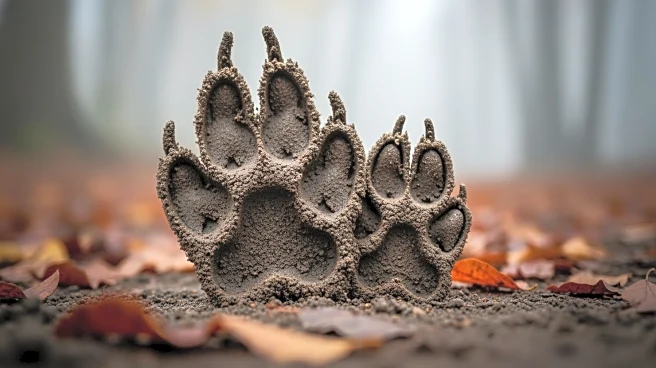
In Preston, Lancashire, three large dogs with wolf-like features were found roaming the streets, sparking viral interest. DNA tests revealed these animals, named Little Timmy, Boo, and Brooke, to be 49.1% grey wolf and 50.9% Czechoslovakian wolfdog. They
are now housed at Wolves of Wiltshire, a charity specializing in exotic animals. The organization has decided not to rehabilitate them as pets, allowing them to live with minimal human contact if they choose. Wolf-dogs, a crossbreed between domesticated dogs and wolves, are legal in the UK if they are at least three generations removed from the original wolf parent. However, first or second-generation wolf-dogs require a license and are classified as exotic animals. The legal framework focuses on the number of generations from a wolf rather than the percentage of wolf DNA, which can lead to challenges in responsible breeding.
Why It's Important?
The ownership of wolf-dogs raises significant legal and ethical questions. These animals require specialized care and environments, often beyond the capacity of typical pet owners. The legal distinction based on generational distance rather than DNA content can lead to irresponsible breeding practices, potentially endangering both the animals and the public. The case highlights the need for clearer regulations and public awareness about the complexities of owning such hybrids. This situation underscores the broader implications for animal welfare and public safety, as well as the responsibilities of pet ownership.
What's Next?
Future discussions may focus on revising legal standards to better address the challenges of owning wolf-dogs. This could involve stricter regulations on breeding practices and ownership requirements to ensure that only qualified individuals can care for these animals. Additionally, there may be increased advocacy for public education on the responsibilities and risks associated with owning hybrid animals. Animal welfare organizations might push for more comprehensive guidelines to prevent the mistreatment and abandonment of wolf-dogs.
Beyond the Headlines
The case of the wolf-dogs in Preston highlights broader issues of human-animal interaction and the ethical considerations of breeding animals with wild ancestry. It raises questions about the domestication process and the human desire to own exotic pets. The situation also reflects on the cultural fascination with wolves and the romanticized notion of owning a part of the wild. Long-term, this could influence how society views and regulates the ownership of hybrid and exotic animals.