


What's Happening?
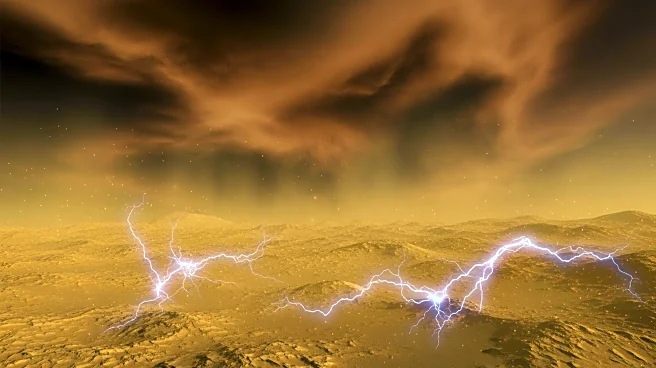
NASA's Perseverance rover has captured the first clear audio recording of electrical discharges within a Martian dust storm. The recordings, made by the rover's SuperCam microphone, reveal faint crackles and mini-sonic booms as dust devils swept across
the surface of Mars. This data was collected inside Jezero Crater on September 6 and released by NASA on December 3. The phenomenon, long suspected by researchers, involves wind-blown dust on Mars building up enough static charge to spark, a process facilitated by Mars' thin atmosphere. The rover's findings confirm these theories, providing both visual and audio evidence of the electrified dust devils. The study detailing these findings was published in the journal Nature on November 26.
Why It's Important?
The discovery of electrical discharges in Martian dust storms is significant for several reasons. It enhances the understanding of Mars' atmospheric chemistry and climate, which is crucial for assessing the planet's habitability and planning future missions. The ability to record and analyze these electrical events provides insights into the triboelectric effect, a process similar to static electricity on Earth. This knowledge could influence the design of future robotic and human missions to Mars, ensuring that equipment can withstand or utilize these electrical phenomena. Additionally, understanding these dust storms is vital for the safety and success of future exploration missions, as they can impact both surface operations and atmospheric conditions.
What's Next?
Future missions to Mars will likely incorporate the findings from Perseverance's recordings to improve mission planning and equipment design. Researchers will continue to study the data to gain a deeper understanding of Martian weather patterns and atmospheric conditions. This could lead to the development of new technologies to harness or mitigate the effects of electrical discharges in dust storms. As NASA and other space agencies plan for human exploration of Mars, these insights will be critical in ensuring the safety and success of astronauts and equipment on the Martian surface.
Beyond the Headlines
The recording of electrical discharges in Martian dust storms opens up new avenues for research into the planet's atmospheric dynamics. It also raises questions about the potential for similar phenomena on other celestial bodies with thin atmospheres. The findings could have implications for the search for life on Mars, as understanding the planet's climate and weather patterns is essential for identifying habitable environments. Additionally, the study of these electrical events may contribute to broader scientific knowledge about atmospheric electricity and its role in planetary systems.