



What's Happening?
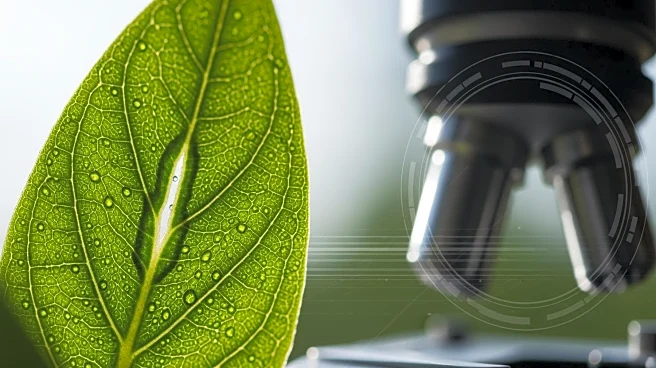
Researchers at the University of Illinois Urbana-Champaign have developed a new system that allows scientists to observe how plant stomata, the tiny pores on leaves, regulate air and water in real time. This system combines live leaf imaging with gas
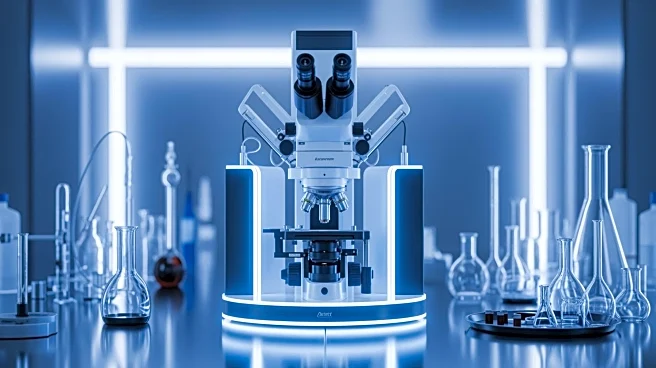
measurements, capturing the behavior of multiple pores simultaneously. Led by Professor Andrew D.B. Leakey, the research aims to understand how crops manage heat, drought, and rising carbon dioxide levels, linking leaf biology to agricultural yields. Traditional microscopy often misses the rapid environmental changes that stomata respond to, but the new system integrates a laser microscope, gas sensors, and a sealed chamber to maintain stable conditions while recording data. This allows for precise measurement of gas flow and pore movement, providing insights into plant water use efficiency and potential agricultural improvements.
Why It's Important?
The ability to observe plant stomata in real time has significant implications for agriculture, particularly in improving water use efficiency. As irrigation accounts for a large portion of freshwater use in the U.S., understanding how plants manage water and carbon intake can lead to the development of crops that require less water without sacrificing growth. This research could help breeders identify plant varieties that are more resilient to drought and other environmental stresses, potentially leading to more sustainable agricultural practices. Additionally, the system's ability to link pore behavior with gas exchange offers a new tool for studying plant physiology and could inform future efforts to engineer crops with optimized traits for changing climates.
What's Next?
Future research will likely focus on testing the system across different plant species and under various stress conditions to validate its effectiveness. The insights gained could guide breeding programs aimed at developing crops with improved drought resistance and water efficiency. As the system becomes more refined, it may also be used to explore other aspects of plant physiology and contribute to broader efforts in sustainable agriculture. Collaboration with agricultural scientists and breeders will be crucial to translating these findings into practical applications in the field.