








What's Happening?
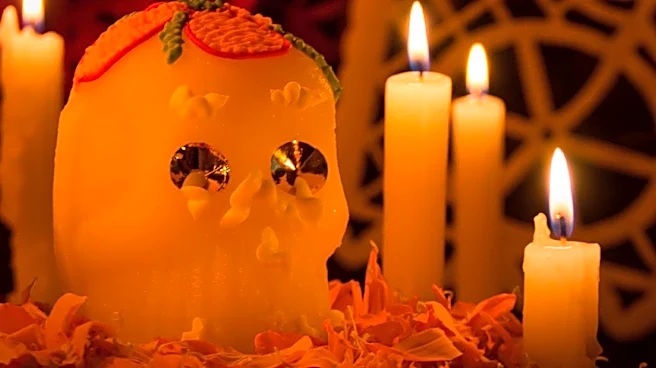
A Minneapolis business, Lito's Burritos, is using a traditional Día de los Muertos (Day of the Dead) ofrenda to draw attention to the impacts of recent ICE (Immigration and Customs Enforcement) operations, specifically 'Operation Metro Surge,' on the community.
Miguel Hernandez, the owner of Lito's Burritos, created the altar not only to honor deceased loved ones, as is customary, but also to acknowledge the losses and fears experienced by immigrant families due to increased immigration enforcement. The ofrenda features a non-traditional design, reflecting Minnesota's advocacy for immigrant communities, and is filled with various foods and drinks, such as Mexican Coke and Ecuadorian sodas, to honor individuals rather than statistics. Hernandez emphasized the importance of taking time to process these events and to come together for healing and continued advocacy.
Why It's Important?
This initiative by Lito's Burritos is a powerful example of how cultural traditions can be adapted to address contemporary social and political issues. By integrating the impact of ICE operations into a Día de los Muertos celebration, the business is providing a public space for grieving, remembrance, and community solidarity in the face of immigration enforcement. This act highlights the emotional and psychological toll that such operations have on immigrant communities, extending beyond legal and economic consequences. It underscores the idea that every family, regardless of immigration status, can be affected by these events. The ofrenda serves as a visible statement of resistance and resilience, aiming to humanize the experiences of those impacted and to foster a sense of collective strength in advocating for immigrant rights and support.
What's Next?
The ofrenda at Lito's Burritos will remain open to the public for a week, providing an ongoing opportunity for community members to visit, reflect, and pay their respects. This public display could inspire similar initiatives in other communities affected by immigration enforcement, using cultural expressions to raise awareness and foster solidarity. The event may also draw further media attention to the local impacts of federal immigration policies, potentially influencing public opinion and local political discourse. For Miguel Hernandez and Lito's Burritos, this act of community engagement could strengthen their ties with local advocacy groups and reinforce their role as a community hub. The broader conversation about immigration enforcement and its human cost is likely to continue, with such grassroots efforts playing a crucial role in shaping public understanding and response.
Beyond the Headlines
The use of a Día de los Muertos ofrenda to address the impact of ICE operations reveals the deep cultural and spiritual dimensions of the immigration debate. Día de los Muertos is a celebration of life and remembrance, and by dedicating the altar to those affected by immigration enforcement, Hernandez is asserting that the experiences of immigrant communities are integral to the fabric of American society. This act challenges the dehumanizing aspects of immigration policy by emphasizing individual stories and the collective pain of separation and fear. It also highlights the role of small businesses and cultural institutions as sites of social commentary and activism. The initiative suggests that for many, the fight for immigrant rights is not merely a political struggle but a deeply personal and communal endeavor, rooted in cultural identity and shared humanity.