




What's Happening?
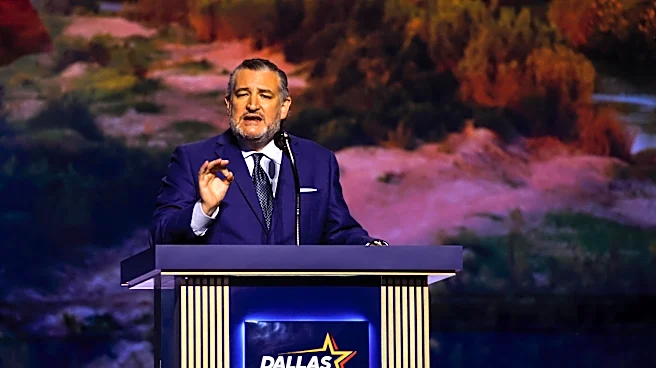
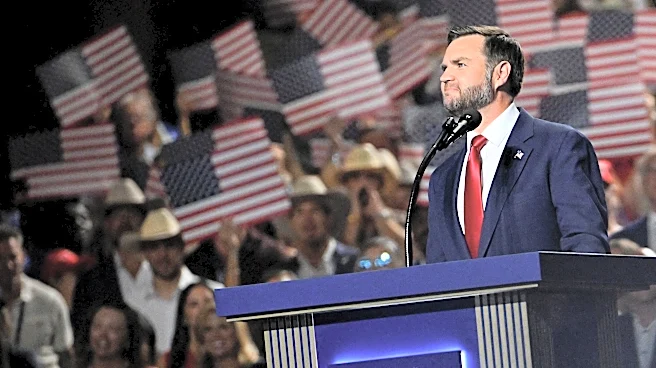
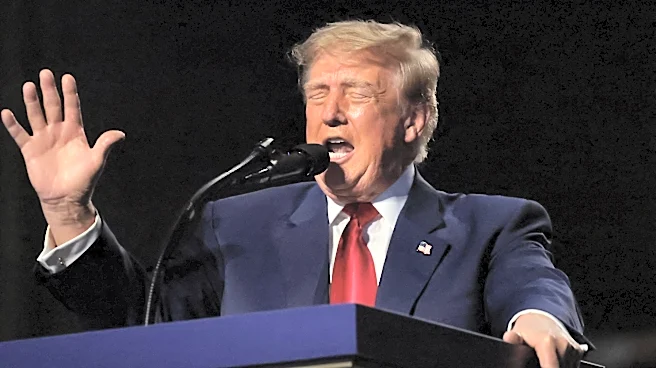
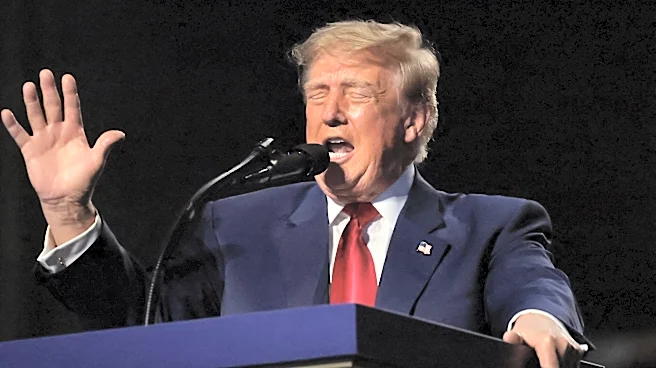
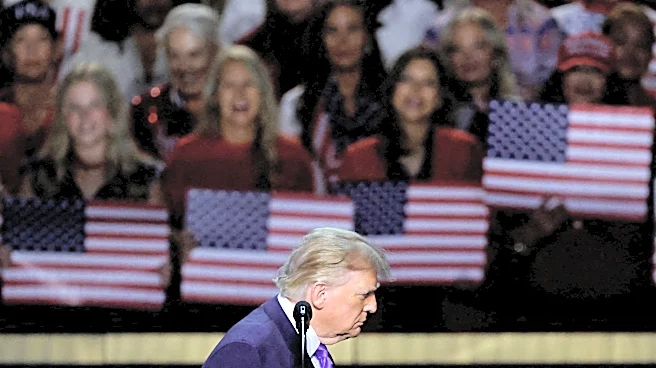
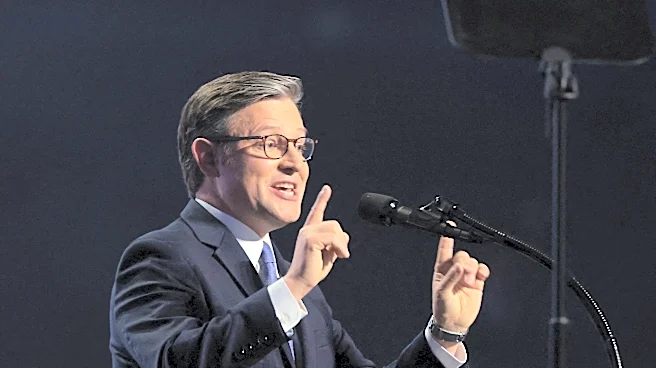
House Speaker Mike Johnson (R-LA) stated on Sunday that President Trump's proposal to issue $5,000 dividend checks to American adults would necessitate congressional action. President Trump announced this plan during a speech at the GOP's midterm convention
in Dallas, Texas, on Wednesday night. He specified that the dividend would be issued if Republicans secure control of both the House of Representatives and the Senate in November. Representative Tim Walberg (R-Mich.) also commented on the proposal, noting it was the first he had heard of it but deemed it good economic policy. Senator Bernie Moreno (R-Ohio) expressed support for the idea and indicated he would prepare legislation for the payments. The proposed payout of $5,000 to an estimated 270 million adults would cost the U.S. government approximately $1.35 trillion, at a time when the U.S. public debt has recently exceeded $40 trillion.
Why It's Important?
This proposal carries significant implications for U.S. economic policy and the upcoming midterm elections. If enacted, a $1.35 trillion payout could inject a substantial amount of money into the economy, potentially stimulating consumer spending but also raising concerns about inflation and the national debt. The requirement for congressional action means the plan would face scrutiny and debate regarding its funding mechanisms and overall economic impact. For the Republican party, this proposal could serve as a key campaign promise, aiming to incentivize voter turnout by offering direct financial relief to citizens. However, the feasibility and economic wisdom of such a large-scale direct payment, especially given the current national debt, will likely be central to political discourse. The plan also highlights a potential shift towards more direct economic interventions as a political strategy.
What's Next?
The immediate next step involves the Republican party, particularly in Congress, determining the viability and specific legislative path for President Trump's proposed $5,000 dividend checks. House Speaker Johnson indicated that Congress would need to "work through it and find consensus." This suggests that detailed legislative proposals, including how to fund such a massive expenditure, would need to be developed and debated. The proposal will undoubtedly become a significant talking point in the lead-up to the November midterm elections, with both Republican and Democratic candidates likely to address its merits and drawbacks. Public and economic expert reactions will also shape the political landscape surrounding this idea, influencing whether it gains broader support or faces significant opposition.
Beyond the Headlines
Beyond the immediate political and economic considerations, President Trump's proposal touches upon deeper questions regarding the role of government in direct wealth distribution and the use of fiscal policy as a tool for political mobilization. The concept of a 'dividend' from the government, rather than traditional welfare or stimulus, could reframe public perception of economic aid. It also raises ethical questions about the timing and conditions of such payouts, particularly when tied to election outcomes. The long-term implications for fiscal responsibility and the national debt could be profound, potentially setting a precedent for future administrations to consider similar large-scale direct payments. This move could also further polarize economic debates, with proponents arguing for direct relief and opponents emphasizing fiscal prudence and the potential for inflationary pressures.