








What's Happening?
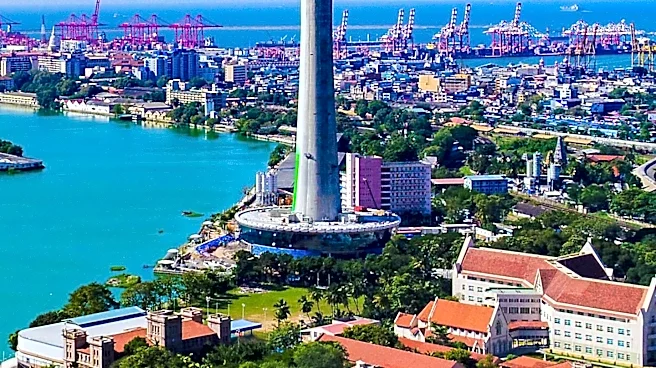
China Merchants Port Holdings, a state-owned Chinese firm, has withdrawn from a $392 million logistics hub project at Sri Lanka’s Colombo Port. Minister Bimal Rathnayake informed the Sri Lankan Parliament on October 21 that the withdrawal was due to unfulfilled
procedures and the termination of a 10-acre land allocation between the port’s East and West Container Terminals. Other contributing factors included regulatory obstacles, changing commercial considerations, and implementation delays. The South Asia Commercial and Logistics Hub, announced in 2023 and expected to be completed by the end of 2025, was intended to be the first major foreign direct investment in Sri Lanka after its 2024 default on external borrowing. China Merchants Port Holdings was set to hold a 70% stake, with Sri Lanka Ports Authority (SLPA) and Access Engineering each holding 15%. The Sri Lankan government has accepted the decision and plans to develop a new logistics hub through a fresh competitive bidding process under a public-private partnership model. All shareholders are eligible for refunds totaling approximately $29.8 million, with the Chinese entity receiving nearly $21 million for land lease payments.
Why It's Important?
China's withdrawal from this significant port project in Sri Lanka carries substantial geopolitical implications, particularly for the Indo-Pacific region. The project's cancellation creates an opening for other geopolitical players, including the U.S. and its allies, to expand their presence in the global maritime infrastructure sector. For the U.S., this could mean opportunities for American companies or allied nations to invest in Sri Lanka's strategic port infrastructure, potentially counterbalancing China's influence in a critical maritime trade route. The incident also highlights the risks associated with large-scale infrastructure projects in politically unstable regions and the importance of transparent procedures. The Lowy Institute suggests this presents an opportunity for countries like Australia to demonstrate a different approach to regional cooperation, focusing on institutional development rather than solely replacing Chinese investment. This shift could influence future investment strategies and partnerships in the Indo-Pacific, impacting regional stability and economic development.
What's Next?
The Sri Lankan government plans to proceed with developing a new logistics hub through a fresh competitive bidding process, utilizing a public-private partnership model. This opens the door for alternative international investors, including those from India, Australia, and potentially the U.S., to participate. The immediate question for India is whether its companies will bid for the project, given their existing presence at the port. The discontinuation of the project does not necessarily signal Beijing's complete departure from Sri Lankan infrastructure, but it does offer other nations a chance to demonstrate alternative models of regional cooperation. Future developments will depend on Sri Lanka's selection process, commercial terms, and project requirements, as well as the geopolitical strategies of interested nations aiming to strengthen their influence in the Indo-Pacific.
Beyond the Headlines
This event underscores the complex interplay between economic development, geopolitical competition, and domestic politics in smaller nations. Sri Lanka's experience with the Chinese-backed project, following its economic crisis and default, highlights the vulnerabilities of countries reliant on foreign direct investment. The withdrawal, partly attributed to 'regulatory obstacles' and 'unfulfilled procedures,' points to deeper issues of governance and transparency that can deter even major international investors. The broader implication is a potential re-evaluation of investment strategies by both host countries and foreign powers, moving towards more sustainable and transparent partnerships. This could foster a more diversified and resilient infrastructure development landscape in the Indo-Pacific, reducing over-reliance on any single foreign power and promoting greater regional stability.