





What's Happening?
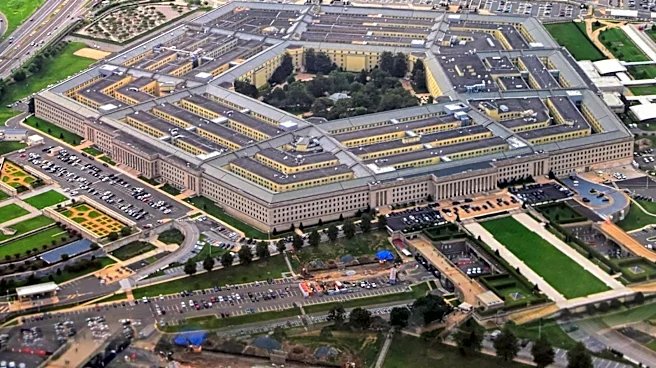
On September 11, 2001, as a hijacked commercial jetliner crashed into the Pentagon, pre-existing reinforcement work by U.S. Army engineers is being credited with significantly mitigating casualties. Dr. Paul Mlaker, who retired from the U.S. Army Engineer
Research and Development Center (ERDC) in 2015, was on-site cataloging damage shortly after the impact. The Pentagon, built in 1941, had undergone a five-phase renovation effort prioritizing safety and stability, initiated in response to troubling world events like the 1993 World Trade Center bombing and the 1995 Oklahoma City bombing. The first phase of this renovation, focusing on 'Wedge 1' of the building, had been completed just days before the attack. This work included blast-resistant windows, ballistic materials, and wall reinforcements, which were originally intended to protect against threats like truck bombs. Despite the horrific nature of the attack, which killed 125 military and civilian workers, the structural integrity provided by these reinforcements allowed hundreds of people to evacuate.
Why It's Important?
The pre-9/11 reinforcement work at the Pentagon highlights the critical importance of proactive infrastructure security measures in safeguarding lives against unforeseen threats. The decision to prioritize safety and stability over aesthetics in the renovation proved invaluable, demonstrating how strategic engineering investments can have profound humanitarian impacts. The comparison between reinforced and non-reinforced sections of the building, where an office with ERDC technology remained largely untouched while a non-reinforced one was destroyed, underscores the effectiveness of these measures. This event also served as a catalyst for the ERDC to adapt its research and development programs, leading to 21 patents focused on protecting U.S. forces in a new era of warfare. The experience at the Pentagon on 9/11 provided real-world validation for advanced protective technologies and influenced subsequent security protocols for critical infrastructure nationwide.
What's Next?
Following the 9/11 attacks, the ERDC intensified its efforts to develop techniques and technologies for protecting against evolving threats. The center's researchers recognized a shift in warfare, with weapons being used differently and the emergence of complex attack tactics. This led to a passionate drive to adapt existing programs and develop new ones to address these challenges, particularly as the U.S. prepared its response to global terrorism. The focus shifted towards protecting forces in various operational scenarios, including urban and austere environments. The 21 patents secured by ERDC since 9/11 indicate a continued commitment to innovation in protective technologies. Future developments will likely involve ongoing research into blast-resistant designs, advanced materials, and predictive modeling to enhance the resilience of critical infrastructure and personnel against a wide range of potential threats.
Beyond the Headlines
The Pentagon's experience on 9/11 offers a profound lesson in the long-term value of foresight and investment in infrastructure resilience. Beyond the immediate life-saving impact, it underscores the ethical imperative for governments and institutions to continuously assess and mitigate risks to public safety, even when the specific nature of future threats is unclear. The story also highlights the often-unsung role of engineers and researchers in national security, whose technical expertise can have monumental consequences. The shift in ERDC's focus post-9/11 reflects a broader societal recognition that security threats are dynamic and require continuous adaptation and innovation. This event serves as a stark reminder that preparedness, though costly and often unseen, is an indispensable component of national defense and public welfare, influencing architectural standards, urban planning, and emergency response strategies for decades to come.





