
What's Happening?
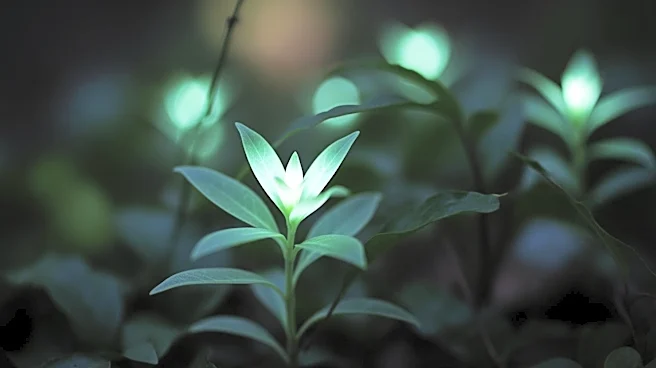
Researchers in China have made significant advancements in creating bioluminescent plants that could serve as sustainable lighting solutions. At South China Agricultural University, scientists have developed
a method of injecting phosphor particles into succulents, which recharge through sunlight or LED exposure, providing temporary but bright illumination. This approach contrasts with another method by Dr. Li Renhan's team at Magicpen Bio, which involves genetic modification using genes from fireflies and luminous fungi to create plants that glow autonomously. These innovations aim to provide electricity-free lighting options, with potential applications in home decor and urban environments. The phosphor-injected succulents can emit light for up to two hours after charging, while genetically modified plants like Light Bio's Firefly Petunias are already available in the U.S., offering a safer, mushroom-like luminescence.
Why It's Important?
The development of bioluminescent plants represents a significant step towards sustainable and eco-friendly lighting solutions. These innovations could reduce reliance on electricity, thereby lowering energy consumption and costs. The potential applications are vast, ranging from home decor to urban lighting, which could transform how spaces are illuminated. This technology also aligns with global efforts to reduce carbon footprints and promote green energy solutions. As these plants become more commercially viable, they could lead to a shift in consumer behavior towards more sustainable living practices. The U.S. market's acceptance of genetically modified plants like the Firefly Petunias indicates a growing interest in integrating such technologies into everyday life.
What's Next?
As research continues, the focus will likely be on enhancing the brightness and longevity of these bioluminescent plants to make them more practical for widespread use. Collaborations, such as the one between Ginkgo Bioworks and Light Bio, aim to develop even brighter variants. While bio-streetlamps may still be years away due to current intensity limitations, the immediate future could see an increase in the availability and variety of bioluminescent plants for personal and commercial use. This could lead to further innovations in sustainable lighting and potentially influence urban planning and design.
Beyond the Headlines
The integration of bioluminescent plants into everyday environments could have broader implications beyond just lighting. It may inspire new aesthetic and functional design trends in architecture and landscaping, promoting a closer connection between technology and nature. Additionally, the ethical considerations of genetic modification and its impact on ecosystems will likely be a topic of discussion as these technologies become more prevalent. The success of these plants could also spur further research into other applications of bioluminescence, potentially leading to breakthroughs in fields such as biotechnology and environmental science.