







What's Happening?
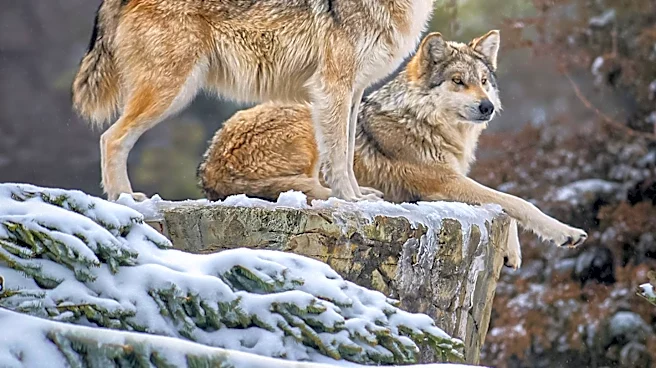
Idaho's wolf population has decreased to an estimated 1,129 animals as of 2025, according to the Idaho Department of Fish and Game. This marks a reduction of approximately 106 wolves from the previous year. The decline is attributed to expanded hunting
and trapping efforts aimed at managing the wolf population. Since 2020, the population has been steadily decreasing from an estimated 1,650 wolves. State officials have expressed a goal to further reduce the population to around 500 animals, citing concerns over livestock predation and ecosystem balance.
Why It's Important?
The reduction in Idaho's wolf population is a contentious issue, balancing wildlife conservation with agricultural interests. While state officials argue that controlling the wolf population is necessary to protect livestock and maintain ecological balance, conservationists express concerns about the potential impact on biodiversity and the accuracy of population estimates. The management of wolf populations is a complex issue that involves ecological, economic, and ethical considerations, highlighting the need for informed and balanced wildlife policies.
What's Next?
Idaho plans to continue its aggressive management strategy to further reduce the wolf population. This includes expanded hunting and trapping seasons and methods. The state's approach may face legal and public scrutiny, as conservation groups advocate for more sustainable and humane management practices. Ongoing monitoring and research will be crucial to ensure that population estimates are accurate and that management strategies do not adversely affect the ecosystem.