



What's Happening?
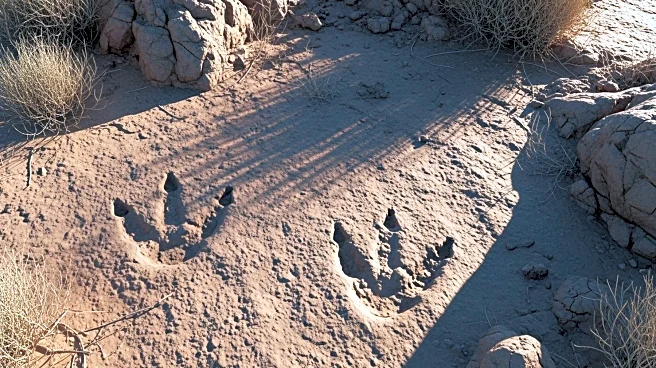
Scientists have discovered 160-million-year-old dinosaur footprints in Chile's Atacama Desert, providing insights into the region's prehistoric ecosystem. The tracks, found in one of the driest places on Earth, suggest that the area once experienced cycles
of flooding and drought, creating ephemeral wetlands that attracted various dinosaur species. The footprints, attributed to small theropods, are the smallest recorded in Chile and possibly along the western edge of Gondwana. The study, published in the Swiss Journal of Palaeontology, used digital modeling to analyze the tracks, offering a glimpse into the behavior and environment of these ancient creatures.
Why It's Important?
This discovery sheds light on the diversity and adaptability of dinosaur species in prehistoric ecosystems. The presence of small theropods in the Atacama Desert suggests a more complex and dynamic environment than previously understood. The findings contribute to the broader understanding of how ancient species adapted to extreme environmental conditions, a topic that resonates with current studies on climate change and its impact on biodiversity. Additionally, the research highlights the importance of paleontological studies in reconstructing Earth's climatic and ecological history.