








What's Happening?
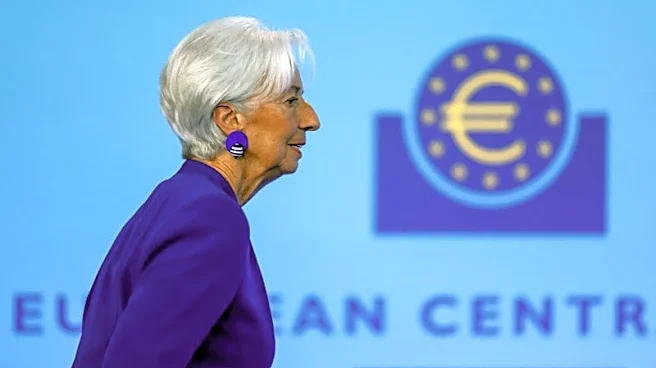
The European Central Bank (ECB) has increased its key interest rates by 25 basis points, bringing the deposit rate to 2.25% and the refinancing rate to 2.4%. This decision, announced on June 11, 2026, marks the ECB's first rate hike since 2023. The move
is a response to inflationary pressures exacerbated by the ongoing conflict in the Middle East, which has driven energy prices higher and pushed inflation in the euro zone above the ECB's target of 2%. The ECB has also revised its economic growth forecasts downward, projecting growth of 0.8% in 2026, 1.2% in 2027, and 1.5% in 2028. The ECB's Governing Council emphasized that the rate hike aims to prevent these inflationary pressures from broadening into higher inflation.
Why It's Important?
The ECB's decision to raise interest rates is significant as it reflects the central bank's efforts to combat rising inflation, which has been driven by increased energy costs due to geopolitical tensions. This move is crucial for maintaining price stability in the euro zone, as inflation has exceeded the ECB's target. However, the rate hike also poses risks to economic growth, as higher borrowing costs could stifle economic activity. The ECB's cautious approach highlights the delicate balance it must maintain between curbing inflation and supporting economic growth. The decision will have implications for businesses and consumers in the euro zone, as it may lead to higher loan and mortgage rates.
What's Next?
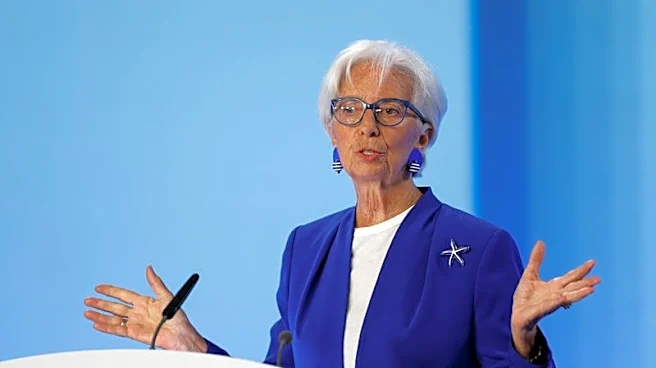
Attention now turns to the ECB's future monetary policy actions, with financial investors anticipating two more rate hikes over the coming year. The ECB's approach is expected to be cautious, given the already stuttering economy and the potential risk of a recession. The ECB's President Christine Lagarde and newly inaugurated Vice President Boris Vujcic are expected to provide further insights during a scheduled press conference. The ECB will continue to monitor inflationary trends and economic growth closely, adjusting its policy as necessary to navigate the uncertain economic landscape.
Beyond the Headlines
The ECB's rate hike decision underscores the broader challenges faced by central banks globally in managing inflation amid geopolitical tensions and economic uncertainties. The move highlights the interconnectedness of global economies, as events in the Middle East have direct implications for European monetary policy. The ECB's actions may also influence other central banks' decisions, as they grapple with similar inflationary pressures. Additionally, the rate hike raises questions about the long-term sustainability of economic growth in the euro zone, as higher borrowing costs could dampen investment and consumer spending.