






What's Happening?
A new historical analysis, 'Two Ships: Jamestown 1619, Plymouth 1620, and the Struggle for the Soul of America' by David S. Reynolds, examines the enduring cultural divide in American history. The book posits that the United States' historical narrative
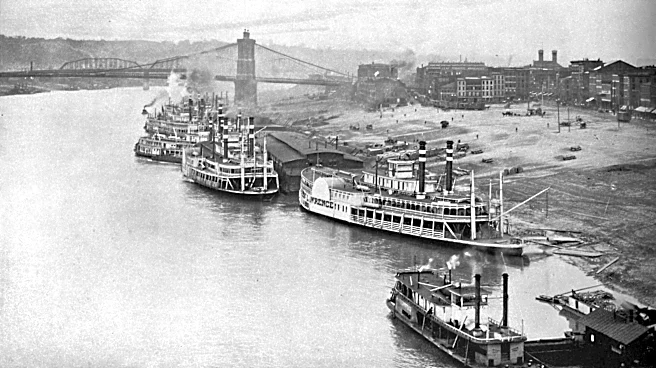
is shaped by two foundational cultures: the Puritan North and the Cavalier South. These cultures, originating from the Mayflower and the slave ship White Lion, respectively, have influenced the nation's ideological and moral landscape. Reynolds argues that this dichotomy has persisted through major historical events, such as the American Revolution and the Civil War, and continues to manifest in contemporary cultural and political divisions.
Why It's Important?
Reynolds' 'Two Ships' theory offers a lens through which to understand the persistent cultural and ideological divides in the United States. By tracing these divisions back to the early colonial period, the book provides context for current political and social tensions. This perspective challenges the notion of a unified national identity, suggesting instead that America's history is marked by a struggle between opposing values of liberty and hierarchy. The book's analysis may influence how historians, educators, and policymakers approach the teaching and interpretation of American history, potentially reshaping public discourse on national identity and unity.
Beyond the Headlines
The 'Two Ships' theory raises questions about the implications of viewing American history through a binary lens. While it highlights the deep-rooted nature of cultural divisions, it also risks oversimplifying the complex interplay of factors that have shaped the nation's development. The theory's focus on cultural determinism may overlook the dynamic and evolving nature of American society, which has been influenced by waves of immigration and social change. Additionally, the book's framing of historical events as a moral allegory could provoke debate about the ethical responsibilities of historians in interpreting the past.