






What's Happening?
The Arkansas Department of Transportation (ARDOT) has temporarily suspended mowing operations in areas of the state experiencing extreme drought conditions. This measure is a proactive effort to mitigate the risk of wildfires. Typically, fall mowing operations commence
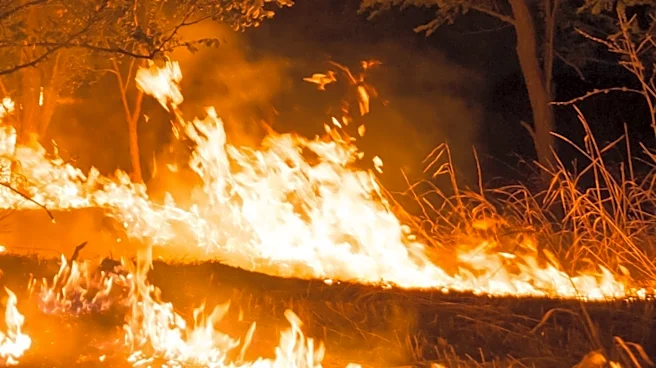
on October 1st and conclude by Thanksgiving across the state. ARDOT district engineers will continuously monitor drought severity using the U.S. Drought Monitor and assess local conditions to determine where mowing should remain suspended. The state's Department of Agriculture's wildfire tracker indicated only one active fire on Sunday, but Arkansas has reported 1,547 wildfires this year, burning a total of 38,276 acres. Fifty-three of Arkansas's 75 counties are currently under burn bans, and the entire state is designated as having a high risk of wildfires, meaning fires ignite easily and spread quickly, with unattended brush and campfires likely to escape and potentially become serious if not addressed promptly.
Why It's Important?
This decision by ARDOT underscores the severe environmental challenges posed by extreme drought conditions in Arkansas and highlights the critical need for preventative measures against wildfires. The suspension of mowing operations, while seemingly minor, reflects a broader strategy to protect lives, property, and natural resources from the devastating impact of uncontrolled fires. Wildfires can lead to significant economic losses, including destruction of homes, infrastructure, and agricultural land, and can also have long-term ecological consequences. The high number of wildfires reported this year and the extensive acreage burned demonstrate the persistent threat. By taking preventative action, the state aims to reduce the burden on emergency services and minimize the potential for widespread damage, thereby safeguarding communities and the environment from the escalating risks associated with prolonged drought.
What's Next?
ARDOT will regularly reassess the affected areas to determine when mowing operations can safely resume. When conditions improve and mowing recommences, crews have been instructed to implement additional safety precautions to further minimize wildfire risks. The U.S. Drought Monitor map will be a key tool for district engineers in making these determinations. The ongoing monitoring and adaptive approach suggest that the suspension could be lifted incrementally as localized conditions improve. However, given that the majority of the state is experiencing severe or extreme drought, and 53 counties are under burn bans, a full resumption of normal mowing operations may not occur until significant rainfall alleviates the drought conditions. The state will continue to manage the high wildfire risk through burn bans and public awareness campaigns.