






What's Happening?
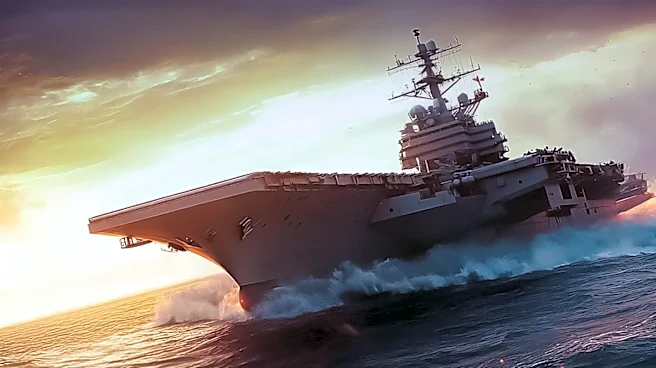
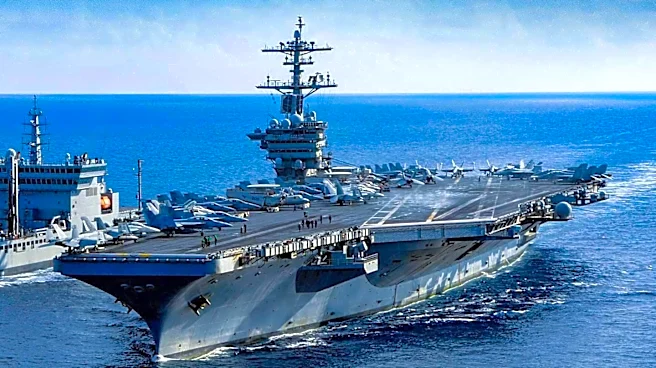
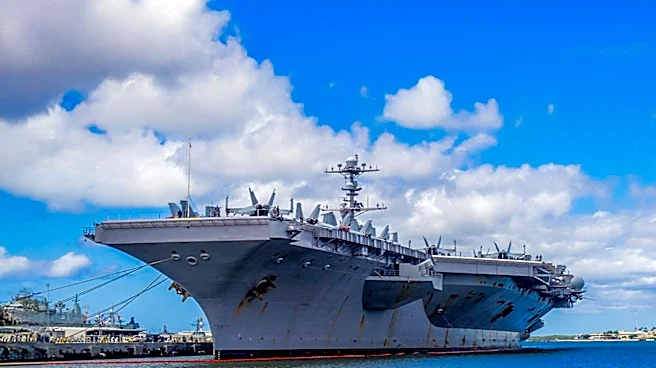
The USS Gerald R Ford, a Ford-class aircraft carrier, has arrived at the Norfolk Naval Shipyard (NNSY) for its first planned incremental availability (PIA). This marks the first time a Ford-class carrier is being serviced at a public shipyard, as confirmed
by shipyard officials on July 8. The shipyard, which has undergone significant organizational and operational changes to improve performance, is preparing to work on the new-class carrier under a unique arrangement with HII's Newport News Shipbuilding, the builder of the warship. Rear Admiral Kavon Hakimzadeh, the commander of NNSY, highlighted the challenges of this PIA, noting that it is the first for a new-class ship following a long deployment. The USS Gerald R Ford recently completed a 326-day deployment, the longest for a carrier since the Vietnam era, involving operations in the Mediterranean, Caribbean, and Red Seas.
Why It's Important?
The arrival of the USS Gerald R Ford at Norfolk Naval Shipyard is significant as it represents a critical test for the shipyard's recent improvements in efficiency and performance. Successfully servicing the Ford-class carrier could enhance the shipyard's reputation and operational capabilities. This event also underscores the strategic importance of maintaining and upgrading the U.S. Navy's fleet, particularly as the Ford-class carriers are integral to modern naval operations. The collaboration between the public shipyard and Newport News Shipbuilding could set a precedent for future maintenance and upgrades of Ford-class carriers, potentially influencing public-private partnerships in naval shipbuilding and maintenance.
What's Next?
The Norfolk Naval Shipyard will undertake the PIA for the USS Gerald R Ford, with Newport News Shipbuilding remaining the planning class for such work. The shipyard will need to address the challenges of working on a new-class carrier, which may involve unforeseen issues due to the ship's recent extensive deployment. The outcome of this PIA could impact future maintenance schedules and strategies for Ford-class carriers, as well as influence the Navy's approach to public-private partnerships in ship maintenance.