







What's Happening?
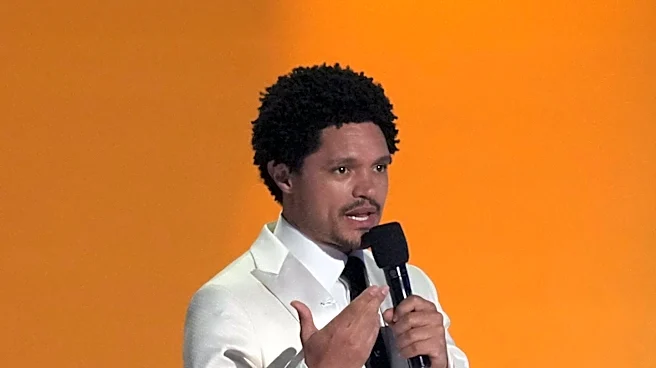
Trevor Noah, the South African comedian, actor, and former host of The Daily Show, is recognized for his memoir, 'Born a Crime.' This book delves into his experiences growing up in apartheid-era South Africa. Noah, born to a white Swiss father and a Black
Xhosa mother, faced significant challenges due to the severe racial segregation policies of the time. His memoir highlights the complexities of his upbringing and the societal structures that defined his early life. Through his narrative, Noah provides insight into the personal impact of apartheid and the unique circumstances of his mixed-race heritage in a racially divided nation. His work often uses humor to address themes of identity and social change, demonstrating how comedy can serve as a tool for understanding and bridging cultural divides.
Why It's Important?
Trevor Noah's 'Born a Crime' is important for its vivid portrayal of life under apartheid, offering a personal and often humorous perspective on a dark period of South African history. The memoir sheds light on the human cost of racial segregation and the resilience required to navigate such a system. For a U.S. audience, the book provides a crucial international perspective on racial injustice and its long-lasting effects, drawing parallels to historical and ongoing discussions about race and identity within the United States. Noah's ability to blend humor with profound social commentary makes complex issues accessible, fostering empathy and understanding across different cultural contexts. His story underscores the universal themes of belonging, family, and the search for identity, resonating with readers who have experienced or are interested in overcoming societal barriers.
What's Next?
While 'Born a Crime' has already achieved significant success as a New York Times bestseller and has been adapted into a young readers' edition, its continued relevance lies in its educational and cultural impact. The memoir is frequently used in educational settings to teach about apartheid, racial identity, and the power of personal narrative. Future discussions and adaptations of Noah's work could further amplify its message, potentially leading to more widespread use in curricula or new media projects that explore its themes. Noah himself continues to be a prominent voice in comedy and social commentary, and his ongoing work may further build upon the foundations laid by 'Born a Crime,' continuing to bridge cultural gaps and promote understanding through his unique perspective.
Beyond the Headlines
Beyond its immediate narrative, 'Born a Crime' delves into the deeper implications of identity formation in a restrictive society. Noah's experiences highlight the psychological and social complexities of being biracial in a system designed to categorize and separate. The memoir subtly explores how individuals find agency and self-definition even when external forces attempt to dictate their place. It also touches upon the role of language and cultural assimilation, as Noah's ability to speak multiple languages allowed him to navigate different communities and find common ground. This aspect of his story offers a nuanced understanding of how cultural fluidity can be a survival mechanism and a source of strength, providing a powerful commentary on the broader human experience of adapting and thriving amidst adversity.