





What's Happening?
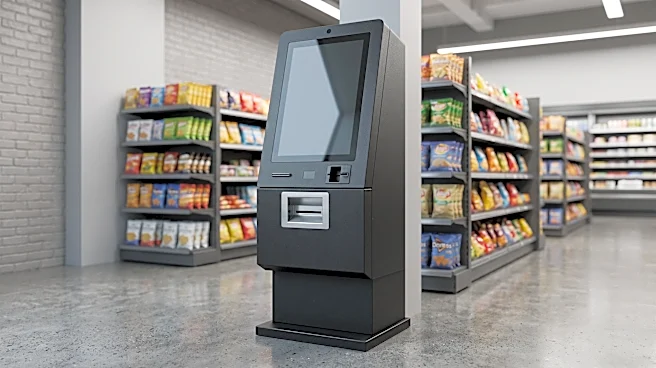
States and cities across the U.S. are increasingly cracking down on cryptocurrency kiosks due to a surge in financial scams. In 2025, the FBI received 13,460 complaints related to these kiosks, with reported losses totaling nearly $389 million, a 58%
increase from the previous year. Four states—Indiana, Minnesota, Tennessee, and Vermont—have enacted statewide bans on cryptocurrency kiosks this year. Hawaii also implemented a new law in October prohibiting consumers from depositing cash into kiosks to buy cryptocurrency. Numerous local communities have also moved to ban or restrict the machines. Scammers frequently direct victims to these kiosks, often located in gas stations and convenience stores, to convert cash into digital currency, which is then transferred to criminal accounts. Older Americans are disproportionately affected, accounting for over half of the complaints and more than $302 million in losses last year.
Why It's Important?
The widespread implementation of bans and restrictions on cryptocurrency kiosks by U.S. states and cities signifies a growing concern among policymakers regarding consumer protection and financial fraud. The substantial financial losses, particularly among older Americans, highlight a critical vulnerability that these machines present. This crackdown reflects a shift from earlier regulatory attempts to outright prohibitions, indicating that previous measures like transaction limits and fraud warnings were deemed insufficient. For the cryptocurrency industry, these bans pose a significant challenge to accessibility and adoption, as kiosks serve as a primary entry point for many individuals into the digital asset market. The actions taken by states and cities underscore the urgent need for more robust safeguards against fraud and a re-evaluation of how digital currency transactions are facilitated to protect vulnerable populations. The debate between outright bans and stricter regulation will continue to shape the future of crypto accessibility in the U.S.
What's Next?
The trend of states and cities banning or restricting cryptocurrency kiosks is expected to continue as policymakers respond to mounting scam reports. More states may follow Indiana, Minnesota, Tennessee, and Vermont in enacting statewide prohibitions. Operators of cryptocurrency kiosks, such as CoinFlip, are likely to face increasing pressure to implement more effective fraud prevention measures, including holding periods for transactions, refund policies for scam victims, and enhanced customer support. The legal challenges and bankruptcies, like that of Bitcoin Depot, illustrate the significant impact of these regulatory actions on the industry. Law enforcement agencies, while acknowledging the utility of tracing crypto transactions on blockchains, are also grappling with the potential for criminals to pivot to less traceable methods if kiosks are entirely removed. This ongoing dynamic will necessitate continuous adaptation from both regulators and the crypto industry to balance innovation with consumer safety.
Beyond the Headlines
The crackdown on cryptocurrency kiosks extends beyond immediate financial protection, touching upon deeper ethical and societal implications. The use of these machines in sextortion schemes and other illicit activities, as highlighted by law enforcement, reveals a darker side of unregulated digital currency access. This raises questions about the social responsibility of technology providers and the extent to which they should be held accountable for the misuse of their platforms. The debate between banning a legal product due to fraud and strengthening enforcement reflects a fundamental tension in regulatory philosophy. While bans offer immediate protection, they may also inadvertently push illicit activities further underground, making them harder to track. This situation underscores the complex challenge of regulating emerging technologies, where the benefits of innovation must be weighed against the potential for harm, and where solutions require a nuanced approach that considers both prevention and enforcement.