
What's Happening?
Tennessee Governor Bill Lee has addressed the crisis following historic flash flooding along the Ocoee River in the Copper Basin region. The river crested at an unprecedented 18.05 feet in Copperhill,
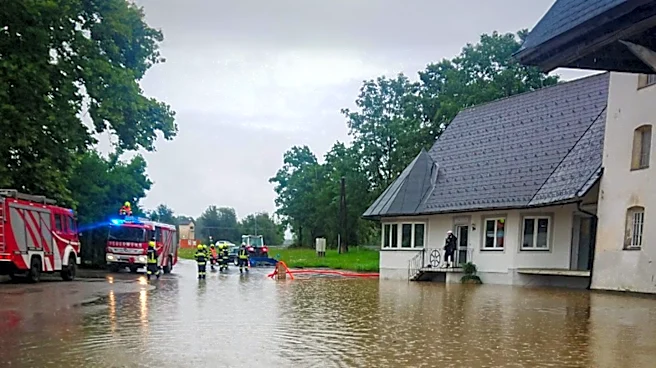
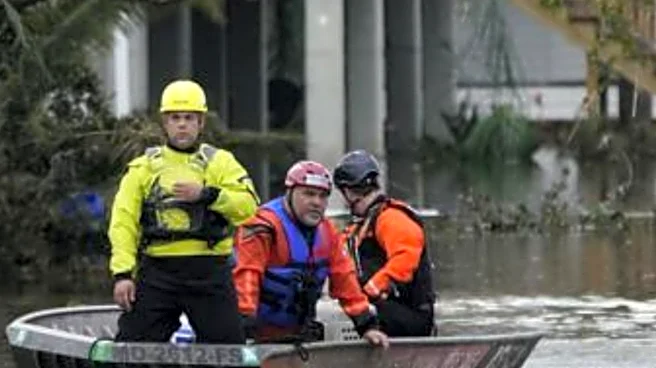
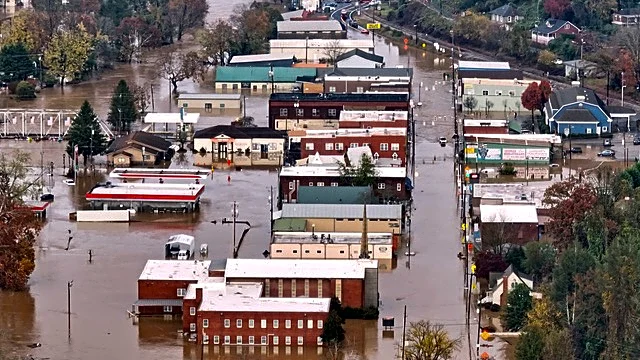
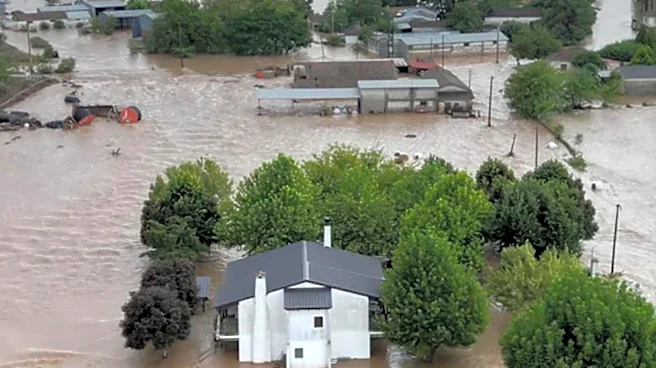
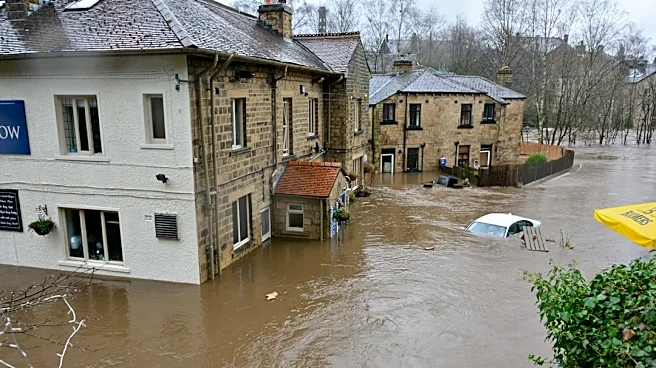
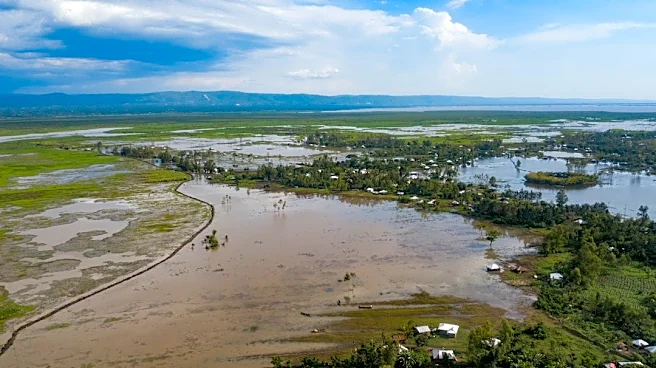
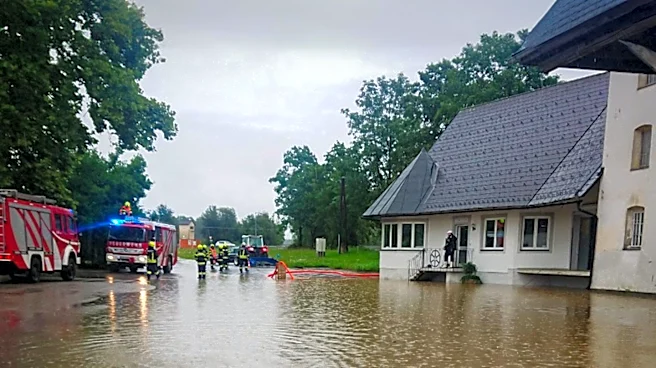
leading to widespread damage including washed-out roads, closed bridges, and stranded residents. In response, the Tennessee Emergency Management Agency (TEMA) activated the State Emergency Operations Center to Level 4 to coordinate statewide resources. Emergency shelters have been established in the Copper Basin area to accommodate displaced individuals. The Tennessee National Guard has mobilized helicopters to conduct aerial rescues, pulling residents to safety from flood-affected areas. Local emergency teams, such as the Chattanooga Fire Department's Swiftwater Rescue Team, have also been deployed, successfully rescuing 11 people and two dogs from the floodwaters. Governor Lee has called for prayers for those impacted and pledged full state support for rescue and response efforts, maintaining close contact with partners in Georgia.
Why It's Important?
This historic flooding event in Tennessee carries significant implications for public safety, infrastructure, and regional emergency response capabilities. The record-breaking river levels highlight the increasing vulnerability of communities to extreme weather events, potentially driven by changing climate patterns. The activation of TEMA's State Emergency Operations Center to Level 4 underscores the severity and scale of the disaster, requiring a comprehensive, multi-agency approach. The deployment of the National Guard for aerial rescues demonstrates the critical role of military support in civilian emergencies, particularly when ground access is compromised. Economically, the damage to roads and bridges will disrupt local commerce and transportation, necessitating substantial repair efforts and funding. For residents, displacement and property loss represent profound personal and financial hardship, emphasizing the need for robust disaster preparedness and recovery programs. The event also tests the coordination between state and local authorities, as well as interstate cooperation with neighboring Georgia, in managing cross-border natural disasters.
What's Next?
Emergency operations, including search, rescue, and evacuation efforts, are currently active and ongoing, with floodwaters expected to persist through Thursday evening. Once the floodwaters recede, state inspectors will assess the damage to bridges and roads to determine the extent of repairs needed. The established emergency shelters will continue to provide refuge for displaced residents, and further support services will likely be coordinated by TEMA and other relief organizations. Governor Lee's pledge of full state support indicates that resources will be allocated for recovery and rebuilding efforts. The long-term focus will shift towards infrastructure repair, assistance for affected residents, and potentially evaluating and enhancing flood mitigation strategies for the Ocoee River basin. The collaboration with Georgia will continue as both states address the regional impact of the flooding.
Beyond the Headlines
The unprecedented cresting of the Ocoee River at over 18 feet raises deeper questions about the long-term environmental and hydrological changes affecting the region. This event could prompt a re-evaluation of existing flood plain management and zoning regulations, particularly in areas previously considered less vulnerable. The reliance on aerial rescues by the National Guard highlights potential gaps in ground-based emergency access during severe flooding, which may lead to investments in more resilient infrastructure or specialized rescue equipment. Furthermore, the disaster could influence public policy discussions around climate resilience and funding for preventative measures against extreme weather. The human element of displacement and loss will also necessitate mental health and community support services, addressing the less visible but profound impacts of such events on individuals and community cohesion. This incident serves as a stark reminder of the increasing frequency and intensity of natural disasters and the continuous need for adaptive strategies.