



What's Happening?
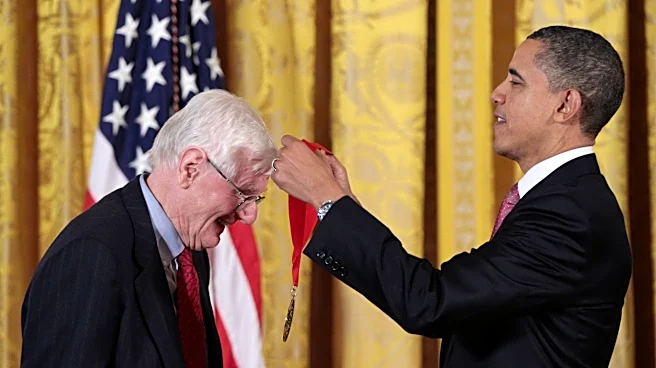
Gordon S. Wood, a renowned historian known for his influential works on the American Revolution, has died at the age of 92. Wood passed away after being struck by a car in a supermarket parking lot in East Providence, Rhode Island. A professor emeritus
at Brown University, Wood was celebrated for his scholarly contributions, including 'The Radicalism of the American Revolution,' which won the Pulitzer Prize in 1993. His work has been a cornerstone in the study of America's early years, providing insights into the nation's founding and the drafting of the U.S. Constitution. Despite his acclaim, Wood faced criticism from some younger academics who felt his work overlooked the roles of marginalized groups in history.
Why It's Important?
Gordon S. Wood's death marks the loss of a pivotal figure in American historical scholarship. His work has shaped the understanding of the American Revolution and its aftermath, influencing both academic circles and public discourse. Wood's interpretations have been foundational in debates about the nature of the U.S. Constitution and the early republic. His passing may prompt a reevaluation of his contributions and the ongoing discussions about inclusivity in historical narratives. The impact of his scholarship extends beyond academia, affecting how American history is taught and understood in broader society.
What's Next?
In the wake of Wood's passing, there may be renewed interest in his works and their place in contemporary historical scholarship. Discussions about the inclusivity of historical narratives are likely to continue, with Wood's critics and supporters revisiting his contributions. Academic institutions may host conferences or publish retrospectives to honor his legacy and explore the future of Revolutionary War studies. Additionally, Wood's influence on public history, including his appearances in media and documentaries, may be reassessed in light of current historiographical trends.
Beyond the Headlines
Wood's career highlights the tension between traditional historical narratives and newer approaches that emphasize the experiences of marginalized groups. His critiques of projects like The New York Times' 1619 Project underscore ongoing debates about the role of slavery in American history. Wood's work serves as a reminder of the complexities involved in interpreting historical events and the importance of balancing different perspectives. His legacy will likely continue to spark discussions about the responsibilities of historians in shaping public understanding of the past.