


What's Happening?
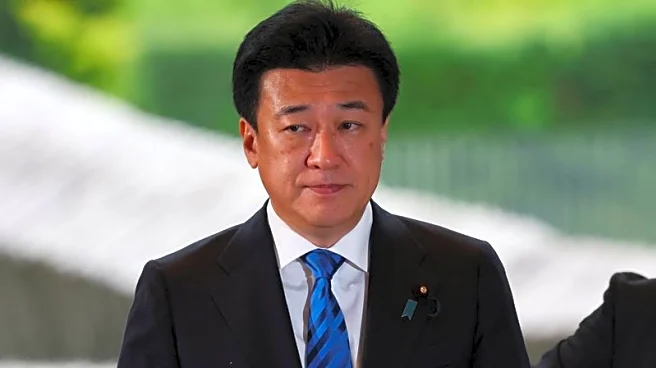
Japan has rejected a U.S. intelligence assessment suggesting that Prime Minister Sanae Takaichi's recent remarks on Taiwan represent a significant policy shift. Chief Cabinet Secretary Minoru Kihara stated that Japan's approach remains consistent, despite
Takaichi's comments about potential Japanese intervention if China attempts to seize Taiwan by force. The remarks had previously sparked a strong reaction from China, including economic measures against Japan. The U.S. report indicated that Takaichi's statements could allow Japan to engage in collective self-defense under certain scenarios, but Japan maintains that no policy change is occurring.
Why It's Important?
The situation highlights the delicate balance Japan must maintain in its foreign policy, particularly regarding Taiwan and its relationship with China. Japan's denial of a policy shift underscores its cautious approach to regional security issues, aiming to avoid escalating tensions with China. The U.S. assessment reflects concerns about potential military conflicts in the region and the implications for international alliances. Japan's stance may influence other countries' policies towards Taiwan and China, as they navigate the complex geopolitical landscape. The situation also emphasizes the importance of clear communication and diplomacy in managing international relations.
What's Next?
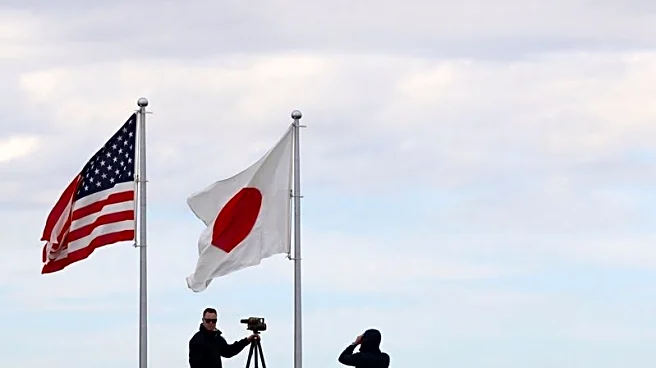
As Prime Minister Takaichi meets with U.S. President Donald Trump, discussions are likely to focus on regional security and the implications of the Iranian conflict. Japan may continue to engage in diplomatic efforts to clarify its position and maintain stability in its relations with China. The situation could lead to further dialogue between Japan, the U.S., and other regional players on security cooperation and collective defense strategies. The international community will closely monitor developments, as any changes in Japan's policy could have significant repercussions for regional stability and global security dynamics.