


What's Happening?
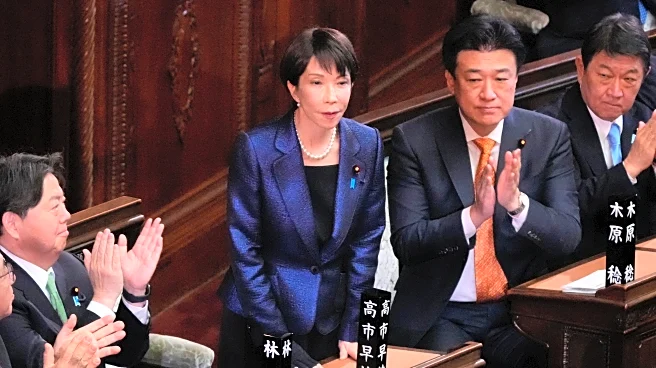
Japanese Prime Minister Sanae Takaichi, along with her cabinet, resigned on Wednesday. This mass resignation occurred during a cabinet meeting held shortly after 9 am local time. The resignation aligns with the convening of a new parliamentary session
in the afternoon, where a new prime minister is expected to be elected. Despite the resignation, Takaichi, who is the president of the ruling Liberal Democratic Party, is anticipated to be reinstated as prime minister. This expectation is based on her party's control of more than two-thirds of the seats in the lower house. The cabinet, initially appointed in October, is unlikely to see significant changes following the recent general election victory on February 8.
Why It's Important?
The resignation and expected reinstatement of Prime Minister Takaichi highlight the political stability and continuity within Japan's ruling party. The Liberal Democratic Party's strong majority in the lower house suggests a seamless transition and continuation of current policies. This political stability is crucial for Japan as it navigates both domestic and international challenges. The event underscores the party's dominance and the potential for sustained policy implementation, which can impact Japan's economic strategies and diplomatic relations, particularly with key partners like the United States.
What's Next?
Following the parliamentary session, the new prime minister will finalize cabinet appointments, with the chief cabinet secretary set to announce the new lineup. Given the Liberal Democratic Party's majority, significant changes in the cabinet are not expected. The focus will likely remain on maintaining current policies and addressing ongoing issues. Observers will be watching for any shifts in Japan's domestic and foreign policy priorities, especially in areas affecting international trade and security alliances.