







What's Happening?
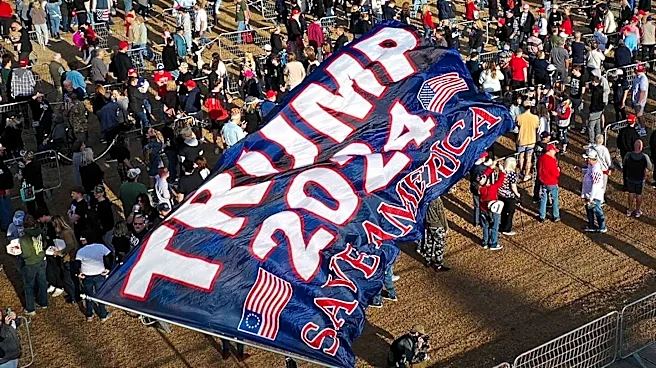
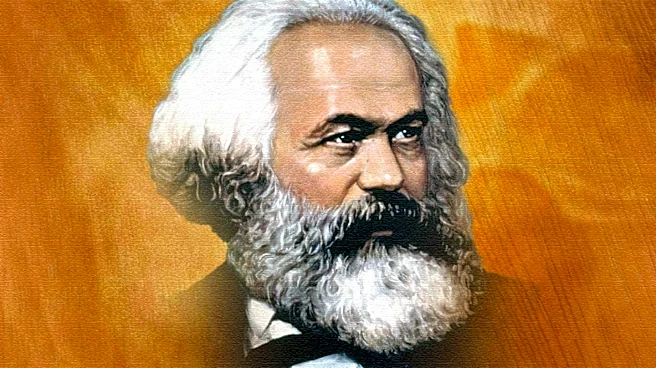
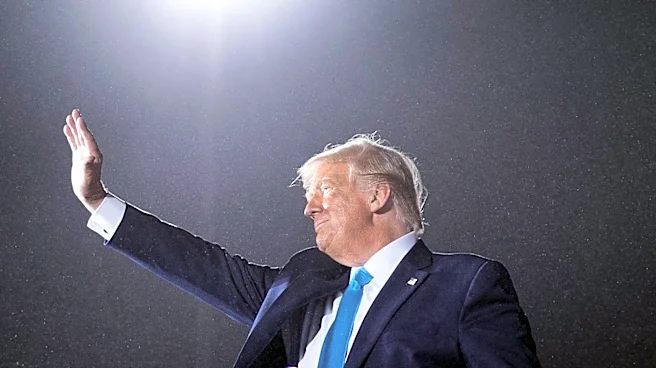
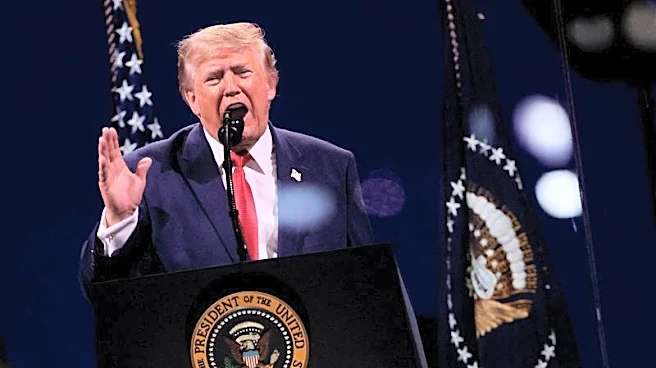
In recent political discourse, the Republican Party, led by President Trump, has intensified its rhetoric by labeling Democrats as communists. This strategy, aimed at the upcoming midterm elections, seeks to exploit divisions within the Democratic Party, which
is currently grappling with internal tensions between its progressive and centrist factions. Critics argue that these accusations are unfounded, as there is no significant communist movement within the United States. The progressive wing of the Democratic Party is pushing for systemic changes, advocating for a fairer economic distribution and a departure from neoliberal policies. Meanwhile, the GOP's narrative suggests that Democrats aim to dismantle traditional American values, a claim dismissed by many as hyperbolic.
Why It's Important?
The GOP's strategy of branding Democrats as communists could have significant implications for the political landscape in the U.S. By framing the opposition in such stark terms, Republicans may galvanize their base, particularly those aligned with the Make America Great Again (MAGA) movement. However, this approach risks alienating moderate voters who may view such rhetoric as extreme. For the Democratic Party, these accusations could either exacerbate internal divisions or unify the party against a common adversary. The outcome of this political maneuvering could influence voter turnout and party dynamics in the upcoming elections, potentially reshaping the balance of power in Congress.
What's Next?
As the midterm elections approach, both parties are likely to intensify their campaigns. The Democratic Party may need to address internal divisions to present a united front against Republican attacks. This could involve reconciling differences between its progressive and centrist members. Meanwhile, the GOP is expected to continue its strategy of labeling Democrats as communists, hoping to consolidate its base. The effectiveness of these tactics will become clearer as election day nears, with potential shifts in voter sentiment and party strategies likely to emerge.
Beyond the Headlines
The use of communist rhetoric in political discourse raises broader questions about the state of American politics. It reflects a polarized environment where ideological labels are used as weapons rather than as descriptors of actual policy positions. This trend could contribute to a more divided society, where political debate is reduced to simplistic binaries. Additionally, the focus on ideological labels may distract from substantive policy discussions, hindering efforts to address pressing issues such as economic inequality and healthcare reform.