



What's Happening?
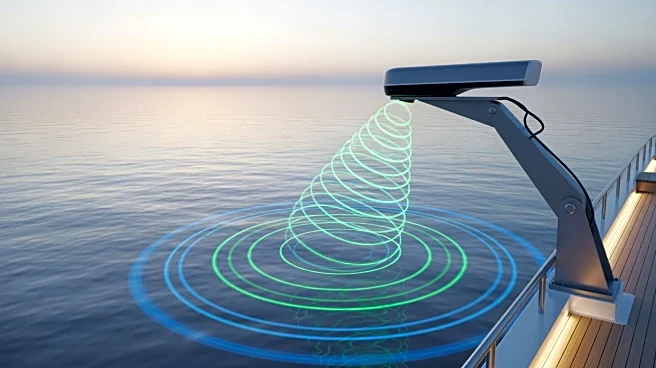
Pearl Expeditions has announced the use of advanced WASSP W3P multibeam sonar technology aboard its vessel, the Paspaley Pearl, to enhance navigation safety in regions with outdated or unreliable charts. This technology is particularly crucial for navigating
the waters of Australia's Kimberley, Papua New Guinea, and Eastern Indonesia. The sonar system, mounted on a tender vessel, provides real-time 3D bathymetric maps to the main vessel, allowing for the identification of underwater obstacles and ensuring safe passage. This system profiles the seabed significantly faster than traditional methods, offering a comprehensive view of the seafloor and water column hazards. The initiative underscores the company's commitment to safe and environmentally responsible expedition cruising.
Why It's Important?
The implementation of this cutting-edge sonar technology by Pearl Expeditions highlights a significant advancement in the safety and environmental responsibility of expedition cruising. By providing accurate and real-time mapping of the seafloor, the technology reduces the risk of accidents and environmental damage, such as anchoring on sensitive reef systems. This approach not only enhances passenger safety but also aligns with growing industry standards for sustainable tourism practices. The ability to navigate safely in remote and poorly charted areas opens up new opportunities for exploration while preserving the natural environments that are central to the expedition experience.
What's Next?
Pearl Expeditions is currently utilizing this technology on its inaugural voyage to Raja Ampat, a region known for its rich coral biodiversity. The company plans to continue leveraging this technology to expand its offerings in other remote regions, potentially setting a new standard for expedition cruising. As the industry increasingly prioritizes sustainability, other operators may follow suit, adopting similar technologies to enhance safety and environmental stewardship. This could lead to broader industry changes, with more companies investing in advanced navigation systems to meet both safety and environmental goals.