



What's Happening?
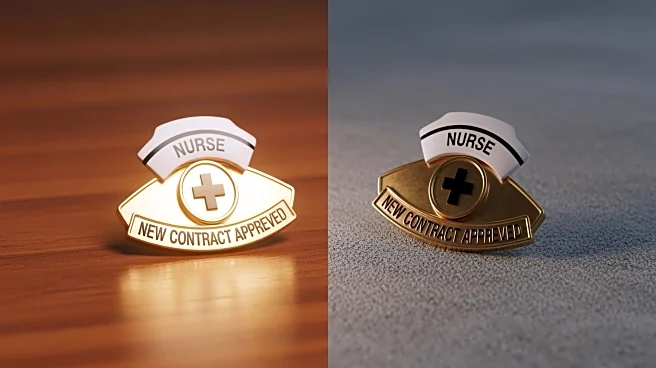
Nurses at Mount Sinai Hospital in New York have voted to approve a new contract, effectively ending a monthlong strike. The agreement includes a three-year pact with provisions for pay raises exceeding 12% over the term, maintenance of health benefits
without additional costs, and new protections against workplace violence. Notably, the contract introduces safeguards against the use of artificial intelligence in hospitals. Despite this resolution at Mount Sinai, nurses at NewYork Presbyterian have rejected a similar proposal, prolonging their strike. The rejected deal was supported by hospital administrators and union leaders but opposed by the union's bargaining committee. The ongoing strike at NewYork Presbyterian highlights ongoing disputes over staffing levels and safety concerns, which were central issues in the negotiations.
Why It's Important?
The resolution of the strike at Mount Sinai and the continuation at NewYork Presbyterian underscore significant labor tensions in the healthcare sector, particularly concerning staffing and safety. The approved contract at Mount Sinai may set a precedent for other hospitals negotiating with unions, especially with its inclusion of AI safeguards. The ongoing strike at NewYork Presbyterian could impact hospital operations, potentially affecting patient care and hospital finances. The situation highlights the critical role of nurses in healthcare and the growing demand for improved working conditions and safety measures. The outcome of these negotiations could influence labor relations in hospitals nationwide, as other healthcare workers may seek similar terms.
What's Next?
With the strike continuing at NewYork Presbyterian, further negotiations are likely as both sides seek a resolution. The hospital may need to address the concerns raised by the union's bargaining committee to reach an agreement. Meanwhile, Mount Sinai will focus on reintegrating its nurses and ensuring a smooth transition back to normal operations. The broader healthcare industry will be watching these developments closely, as the outcomes could influence future labor negotiations and policies regarding AI and workplace safety in hospitals.