





What's Happening?
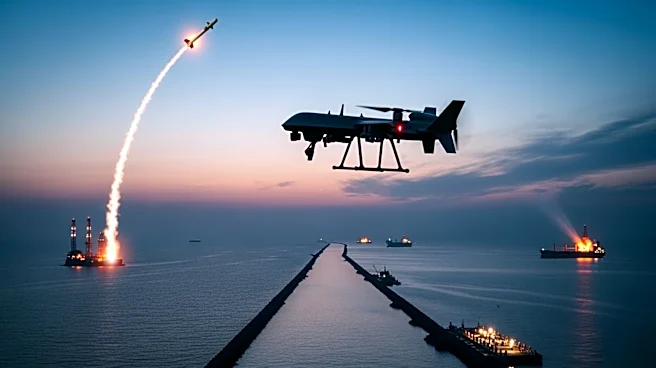
Iran has launched a series of drone and missile attacks on the United Arab Emirates, targeting key oil facilities for the second consecutive day. The attacks are part of Iran's efforts to disrupt the Habshan-Fujairah oil pipeline, a major alternative
to the Strait of Hormuz. The UAE's Ministry of Defense reported that air defense systems are actively responding to the threats. These attacks follow the UAE's recent exit from OPEC and have raised concerns about regional stability and the security of global oil supplies. The situation has prompted international condemnation and calls for restraint.
Why It's Important?
The attacks on the UAE's oil infrastructure highlight the strategic importance of the Strait of Hormuz, a critical chokepoint for global oil shipments. Disruptions in this region can have significant implications for global energy markets, potentially leading to increased oil prices and economic instability. The conflict also underscores the geopolitical tensions in the Middle East, with potential repercussions for international relations and security. The involvement of major powers, including the United States, in the region's dynamics further complicates the situation, raising the stakes for diplomatic and military responses.
What's Next?
The ongoing conflict may lead to heightened military activity in the region, with potential for further escalation if diplomatic efforts fail. The UAE and its allies, including the United States and Israel, may consider retaliatory measures or increased security cooperation to protect critical infrastructure. The international community is likely to continue diplomatic efforts to de-escalate tensions and prevent a broader conflict. Monitoring the situation closely, stakeholders will need to balance military readiness with diplomatic engagement to ensure regional stability.