





What's Happening?
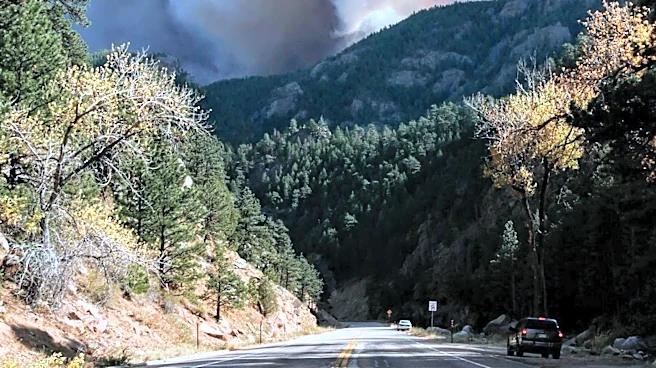
A proposed logging project along the Blue Ridge Parkway has sparked controversy among environmentalists and local residents. The National Park Service, in partnership with the U.S. Forest Service, plans to conduct salvage logging to remove dead and damaged
trees, citing wildfire risk reduction as the primary goal. However, conservationists argue that the project could harm the ecosystem and question the scientific basis for the Park Service's claims. Critics also express concerns about the lack of public input and the potential for commercial interests to influence land management decisions. The project has been scaled back following public outcry, but significant concerns remain about its environmental impact and procedural transparency.
Why It's Important?
The logging project raises important questions about land management practices and the balance between environmental conservation and wildfire prevention. The controversy highlights the tension between federal agencies' mandates to protect natural resources and the pressures to address wildfire risks. The project could set a precedent for similar initiatives in other national parks, potentially affecting conservation policies nationwide. The debate also underscores the need for transparent decision-making processes and robust public engagement in environmental management. The outcome of this project could influence future policy decisions and shape the relationship between federal agencies, local communities, and environmental organizations.
What's Next?
The National Park Service may face continued pressure from environmental groups and local stakeholders to further revise or halt the project. Legal challenges or additional public consultations could arise as conservationists seek to protect the park's ecosystem. The Park Service may need to provide more detailed scientific evidence to justify the project's necessity and address concerns about its environmental impact. Ongoing monitoring and evaluation of the project's effects on the local environment and wildlife will be crucial. The situation may prompt broader discussions about sustainable land management practices and the role of federal agencies in balancing conservation and public safety.