






What's Happening?
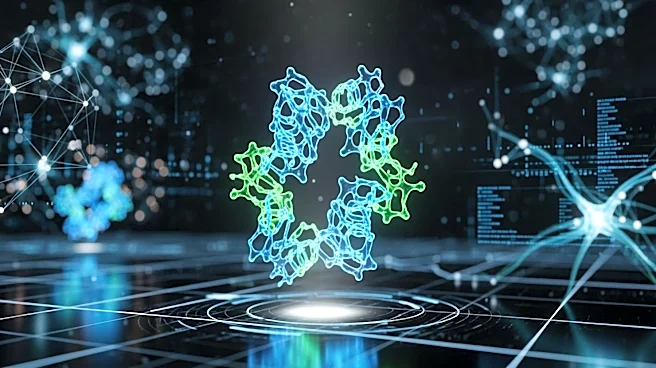
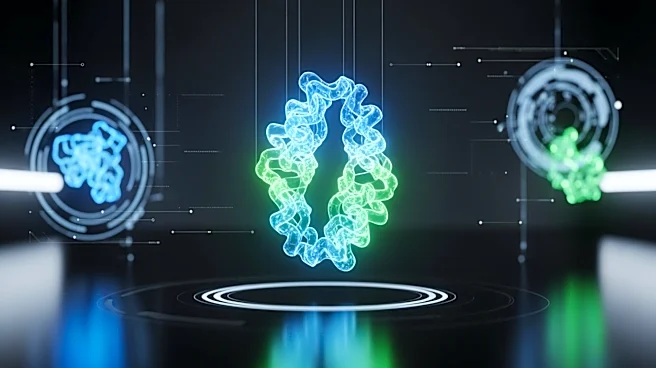
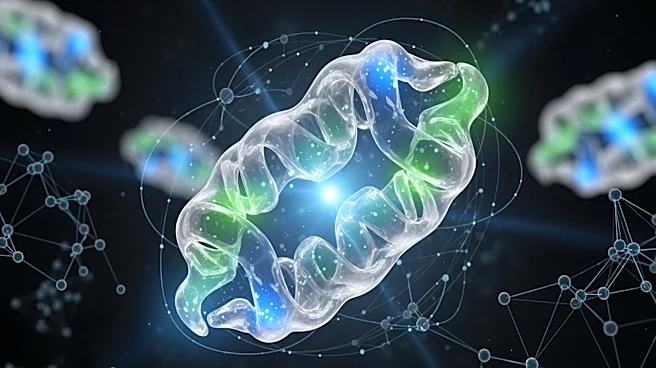
An international team led by researchers at Queensland University of Technology (QUT) has utilized artificial intelligence to create 'smart' proteins that act as molecular sensors. These proteins activate only when they detect specific target molecules,
offering potential applications in medicine, environmental monitoring, and biotechnology. The study, published in Nature Biotechnology, demonstrates that these AI-designed protein switches can function inside living bacterial cells and generate measurable outputs like color changes and electrical signals. This research challenges the traditional belief that sensing proteins require large structural changes to function, showing instead that subtle movements can activate these proteins.
Why It's Important?
This advancement in protein engineering could revolutionize the field of biosensing by providing a new strategy for designing low-cost, effective biosensors. The ability to create custom protein sensors using AI expands the possibilities for detecting a wide range of molecules, which could lead to significant improvements in diagnostic devices and environmental monitoring systems. The research also provides new insights into natural protein regulation, potentially influencing future studies in synthetic biology and protein engineering. By overcoming limitations of traditional methods, this approach could accelerate the development of innovative solutions in various scientific and industrial fields.
What's Next?
The research team plans to further explore the applications of these AI-designed protein sensors in synthetic biology. Potential developments include portable diagnostic devices and engineered cells that respond intelligently to chemical signals. The collaboration with international researchers, including Nobel laureate Professor David Baker, suggests ongoing efforts to refine and expand the technology. As the field progresses, these smart protein sensors could become integral components in a variety of applications, from healthcare to environmental science, offering new tools for monitoring and responding to changes in biological and ecological systems.