


What's Happening?
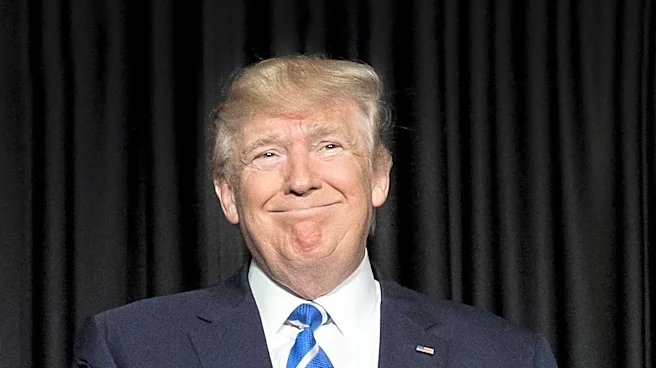
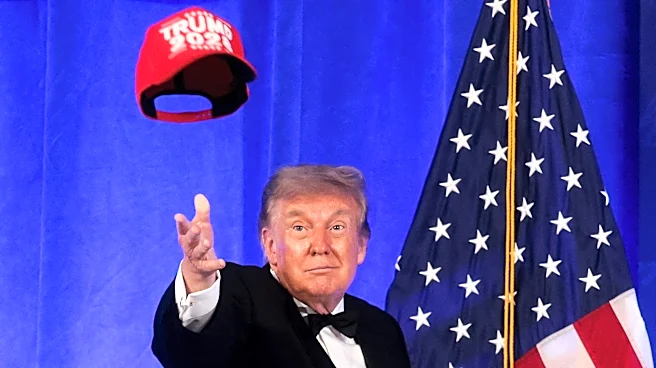
President Trump has once again made comments suggesting a potential third term, despite the 22nd Amendment prohibiting any person from being elected to the presidency more than twice. During a recent event, Trump donned a 'Trump 2028' hat and shared AI-generated
images hinting at another campaign. Legal experts warn that these remarks, while often framed as jokes, could undermine constitutional norms. Anoo D. Vyas, a law professor, emphasized the importance of taking constitutional limits seriously. Trump has previously suggested workarounds, such as running as vice president, but constitutional scholars like James Sample assert that such loopholes do not exist. The 22nd and 12th Amendments clearly prohibit a third term, and experts caution against dismissing Trump's rhetoric as mere humor.
Why It's Important?
The implications of President Trump's comments are significant for U.S. democracy and constitutional integrity. By repeatedly suggesting a third term, Trump challenges the established constitutional framework, potentially eroding public trust in democratic institutions. This rhetoric could energize his political base and distract from other pressing issues, such as economic and foreign policy challenges. The persistence of these comments highlights the polarized political climate and raises concerns about the stability of democratic norms. Experts argue that even if the likelihood of a third term is low, the mere suggestion can have destabilizing effects on the political landscape.
What's Next?
While a third term remains constitutionally unlikely, Trump's comments may influence the political discourse leading up to the 2026 midterm elections. His rhetoric could maintain his influence within the Republican Party and keep him at the center of political attention. Legal scholars and political analysts will likely continue to scrutinize these statements, emphasizing the importance of upholding constitutional limits. The ongoing debate may also impact public perception and voter engagement, as citizens consider the broader implications of such rhetoric on democratic governance.