





What's Happening?
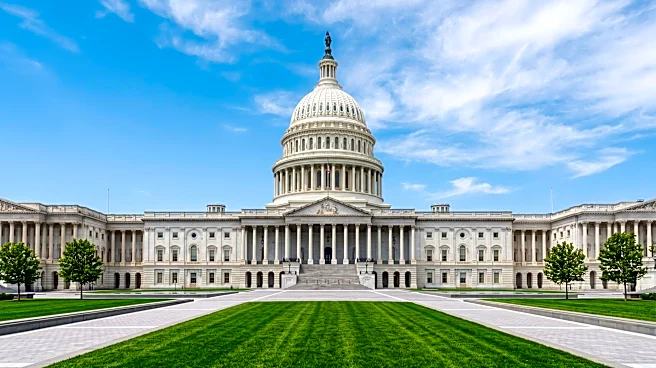
The House Energy and Commerce Committee has unanimously advanced the Diesel Emissions Reduction Act (DERA) of 2025, moving legislation (H.R. 2140) closer to a full House vote. This bill aims to reauthorize the DERA program through fiscal year 2029, extending
its previous authorization of up to $100 million annually. The DERA program, established in 2005, provides federal support for projects that accelerate the replacement or upgrade of older diesel engines and equipment. This includes Class 5-8 highway vehicles, buses, off-road equipment, locomotives, and marine engines. Representatives Doris Matsui, Ken Calvert, Chellie Pingree, and Nick Langworthy introduced H.R. 2140 in March 2025, and it was advanced by voice vote in the House Environment Subcommittee in July before being taken up by the full committee on September 2.
Why It's Important?
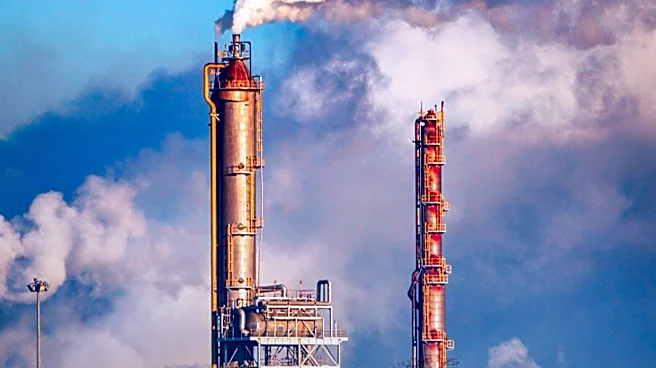
The reauthorization of DERA is crucial for commercial fleets and environmental efforts across the U.S. The program helps motor carriers invest in cleaner, more modern equipment, contributing to reduced diesel emissions and improved air quality. Funding from DERA can support various initiatives, including vehicle and engine replacements, verified retrofit technologies, and idle-reduction technologies. Approximately 30% of annual DERA appropriations are directed to state programs, allowing for localized impact. Historically, demand for DERA funding has exceeded availability, with applicants requesting $220 million more than was available in FY2019 and FY2020 alone. The American Trucking Associations has lauded DERA as instrumental in promoting the deployment of cleaner equipment, highlighting its significance for both the industry and public health.
What's Next?
For H.R. 2140 to become law, it must still pass the full House, and the legislative process needs to be completed by Congress. There is also a companion bill, S. 2235, in the Senate, which cleared the Senate Environment and Public Works Committee by voice vote in October 2025. While the bill authorizes up to $100 million annually through FY2029, actual funding will remain subject to the annual appropriations process. The Congressional Budget Office noted that $90 million was appropriated for DERA in 2025. The House committee's vote represents a significant step towards ensuring the continuation of this established funding program for another five fiscal years, providing ongoing support for fleets to upgrade their equipment.
Beyond the Headlines
The continued reauthorization of DERA underscores a broader commitment to environmental sustainability and public health through technological upgrades in the transportation sector. Beyond the direct benefits of reduced emissions, the program encourages innovation in engine technology and supports the manufacturing sector involved in producing cleaner diesel equipment. It also highlights the ongoing challenge of balancing economic activity with environmental protection, demonstrating a legislative approach that incentivizes voluntary adoption of cleaner technologies rather than solely relying on regulatory mandates. The program's success in saving 572 million gallons of diesel fuel from 2008 to 2020 illustrates its tangible impact on resource conservation and operational efficiency for businesses.