



What's Happening?
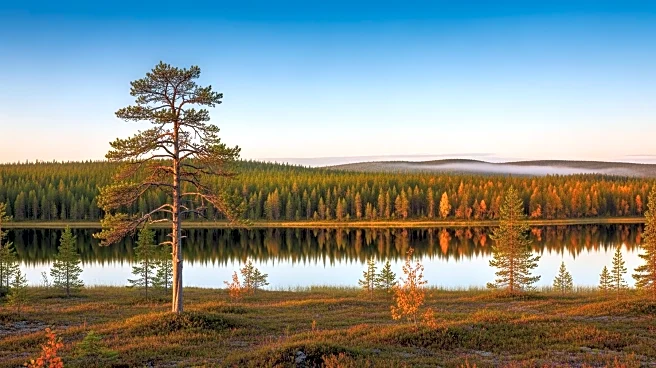
A NASA study has revealed that transitional forests in the North American boreal region are expected to undergo significant changes through the year 2100. The research indicates a shift towards an increased presence of trees and shrubs, driven by Arctic
amplification and climate change. The study connects current forest patterns with recent tree cover trends and future modeled estimates of canopy height. The findings suggest that positive changes in forest height are concentrated in transitional areas, while changes in boreal forests are more variable. These shifts are expected to persist across various climate scenarios, indicating a long-term transformation of the biome.
Why It's Important?
The predicted changes in the boreal forests have significant implications for biodiversity, carbon storage, and climate regulation. As transitional forests expand, they may alter the habitat for numerous species, potentially affecting ecological balances. The increase in tree and shrub cover could enhance carbon sequestration, playing a crucial role in mitigating climate change. However, the variability in boreal forest changes highlights the complexity of predicting ecological responses to climate change. Understanding these dynamics is essential for developing effective conservation strategies and informing policy decisions related to climate adaptation and forest management.
What's Next?
Future research will likely focus on monitoring these biome shifts to refine predictions and assess their ecological impacts. Policymakers and conservationists may need to consider adaptive management strategies to address the challenges posed by these changes. Collaborative efforts between scientists, governments, and local communities will be crucial in developing sustainable approaches to manage forest resources and protect biodiversity. Additionally, the study's findings could influence international climate agreements and initiatives aimed at preserving critical ecosystems.