





What's Happening?
Senator Edward J. Markey (D-Mass.), a member of the Commerce, Science, and Transportation Committee, is calling on Congress to pass his Children and Teens’ Online Privacy and Protection Act (COPPA 2.0) and the Youth AI Privacy Act. This comes in the wake
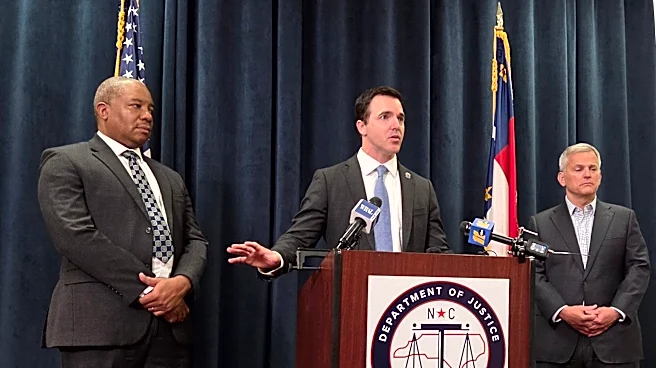
of a significant settlement between Meta and State Attorneys General, which includes an $18 billion payment, with up to $516 million allocated to Massachusetts. The settlement mandates Meta to implement various child-safety measures on its platforms. Senator Markey emphasized that his original Children's Online Privacy Protection Act (COPPA), passed in 1998, played a role in holding Meta accountable. He argues that despite the settlement, further legislative action is necessary to address the evolving landscape of technology, particularly artificial intelligence, and its impact on minors. Markey's COPPA 2.0 aims to update data privacy regulations for the 21st century, while the Youth AI Privacy Act would require AI companies to integrate privacy safeguards for minors into their AI chatbots. He believes that relying solely on court settlements is insufficient to secure robust protections for children's privacy and safety online.
Why It's Important?
The push for COPPA 2.0 and the Youth AI Privacy Act is crucial for safeguarding the privacy and well-being of children and teenagers in an increasingly digital world. The Meta settlement highlights the existing vulnerabilities in online platforms and the potential for exploitation of minors' data. Senator Markey's legislation seeks to establish a proactive regulatory framework that addresses the challenges posed by advanced technologies like AI. Without updated laws, children and teenagers remain susceptible to data exploitation and manipulative practices by tech companies, which can have long-term consequences on their mental health and development. The proposed acts aim to shift the responsibility onto tech companies to design their products with privacy and safety in mind from the outset. This legislative effort could set a precedent for how technology companies are held accountable for their impact on younger users, potentially influencing industry standards and practices across the U.S. and beyond. It underscores the growing recognition among policymakers of the need for stronger protections against the commercialization of children's online experiences.
What's Next?
Senator Markey will continue to advocate for the passage of COPPA 2.0 and the Youth AI Privacy Act in Congress. His COPPA 2.0 legislation passed unanimously through the Senate in March 2026, and the Youth AI Privacy Act also passed unanimously through the Senate Commerce Committee in August. The next steps involve securing a full vote in both chambers of Congress. The Meta settlement provides significant momentum for these legislative efforts, as it underscores the urgency of addressing children's online privacy. Tech companies and industry groups are likely to engage in lobbying efforts, potentially seeking to influence the scope and specifics of the proposed regulations. Civil society organizations and child advocacy groups will likely continue to support Markey's initiatives, emphasizing the need for comprehensive protections. The outcome of these legislative efforts will determine the future regulatory landscape for online platforms and AI companies concerning minor users, potentially leading to new compliance requirements and operational changes for businesses operating in the U.S.
Beyond the Headlines
Beyond the immediate legislative push, this development highlights a broader societal debate about the ethical responsibilities of technology companies and the role of government in regulating digital spaces, especially concerning vulnerable populations. The increasing sophistication of AI raises new questions about data collection, algorithmic bias, and the potential for psychological manipulation, particularly among minors. The proposed legislation touches upon the fundamental right to privacy in the digital age and the need to adapt legal frameworks to keep pace with rapid technological advancements. It also brings to light the tension between innovation and protection, as tech companies often argue that stringent regulations can stifle development. The discussion around these bills could also influence global standards for children's online safety, as other nations grapple with similar issues. Ultimately, the success of these acts could signify a significant shift towards prioritizing user well-being over unchecked technological expansion, fostering a more responsible and ethical digital environment for future generations.