

What's Happening?
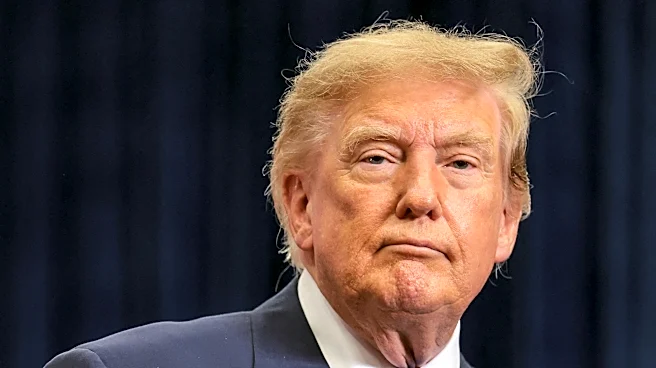
President Trump has reiterated his firm position that Iran must never be allowed to obtain nuclear weapons. In an interview with Fox News, President Trump described Iran's leadership as "very violent, evil people" and asserted that they "won't have a nuclear weapon."
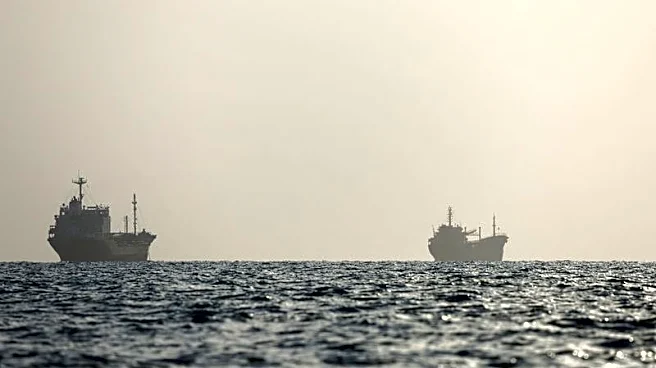
He argued that if Iran were to acquire such a weapon, it would likely use it, leading to the destruction of Israel and potentially targeting the U.S. or Europe next. President Trump also claimed that if he had not been president, Israel and possibly the entire Middle East would no longer exist. He further stated that the U.S. is inflicting significant damage on Iran through an "unbelievable" blockade, hitting them "very hard." President Trump characterized Iran as a "failing nation" and expressed surprise at Iran's actions targeting Gulf countries at the beginning of the conflict.
Why It's Important?
President Trump's statements underscore a critical and long-standing U.S. foreign policy objective: preventing nuclear proliferation, particularly in volatile regions like the Middle East. His assertion that Iran's acquisition of nuclear weapons would lead to the destruction of Israel highlights the severe geopolitical implications and the potential for regional destabilization. This stance reflects concerns about the balance of power and the security of key U.S. allies. The emphasis on an "unbelievable" blockade and "hitting them very hard" indicates a strategy of economic pressure and sanctions aimed at curbing Iran's nuclear ambitions and regional influence. This approach has significant economic consequences for Iran, impacting its ability to fund its programs and potentially leading to internal unrest. For the U.S., maintaining this hardline position involves considerable diplomatic and strategic effort, influencing its relationships with other global powers and its role in international security. The potential for escalation in the region remains a significant concern, with implications for global energy markets and international trade routes.
What's Next?
The U.S. is expected to continue its policy of applying pressure on Iran to prevent it from developing nuclear weapons. This will likely involve maintaining and potentially strengthening economic sanctions and diplomatic isolation. International discussions and negotiations regarding Iran's nuclear program are anticipated to remain a central focus, with the U.S. potentially seeking to build a broader coalition to address the issue. Iran's reactions to these pressures, including its continued development of missile technology and regional activities, will be closely monitored. The rhetoric from both sides suggests a prolonged period of tension, with the possibility of further escalations or de-escalations depending on geopolitical developments. The future of the Iran nuclear deal (JCPOA) and any potential new agreements will also be a key area of focus, as different approaches to non-proliferation are debated among global powers. The security of U.S. allies in the Middle East, particularly Israel, will continue to be a primary consideration in U.S. policy decisions regarding Iran.
Beyond the Headlines
President Trump's strong rhetoric regarding Iran's nuclear ambitions touches upon deeper ethical and strategic considerations. The concept of preventing a nation from acquiring nuclear weapons, while aiming for global security, also raises questions about national sovereignty and the right to self-defense. The potential for a nuclear-armed Iran to destabilize the Middle East highlights the complex interplay of regional rivalries, religious ideologies, and geopolitical interests. The U.S. strategy of economic blockade, while intended to be a non-military form of pressure, can have significant humanitarian consequences for the civilian population, raising ethical dilemmas about the impact of sanctions. Furthermore, the assertion that Israel's existence is contingent on U.S. presidential actions underscores the profound and often contentious nature of U.S.-Israel relations and their role in regional security. The long-term implications of such a confrontational stance could include a heightened arms race in the region, increased cyber warfare, and a re-evaluation of international non-proliferation treaties, potentially leading to a more fragmented global security landscape.