





What's Happening?
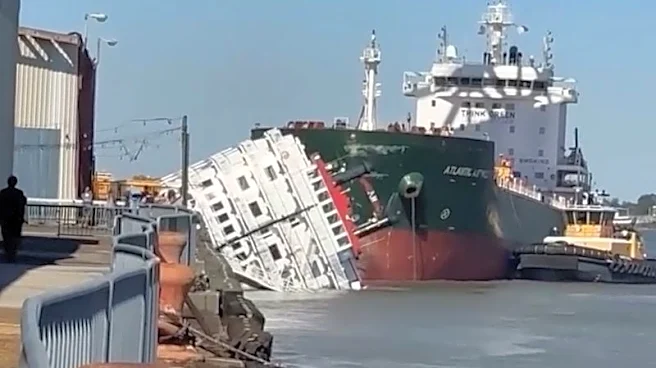
The National Transportation Safety Board (NTSB) has revealed that a tanker ship, the Atlantic Asphalt, experienced a steering failure approximately two minutes before it collided with the riverboat cruise ship American Heritage on the Mississippi River.
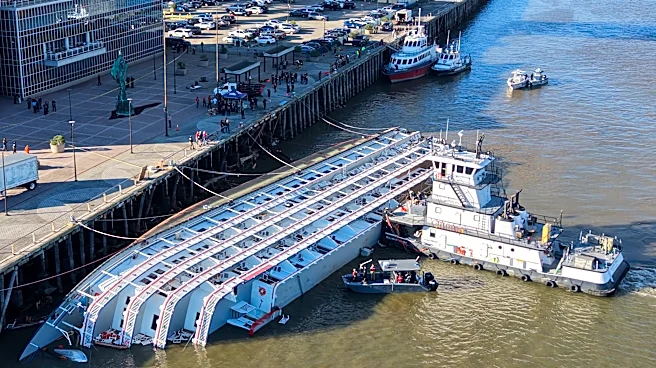
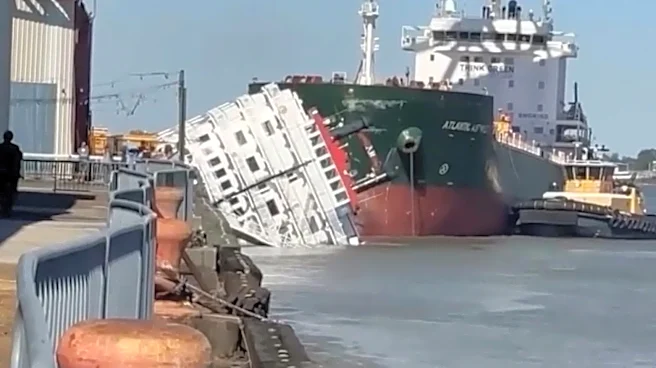
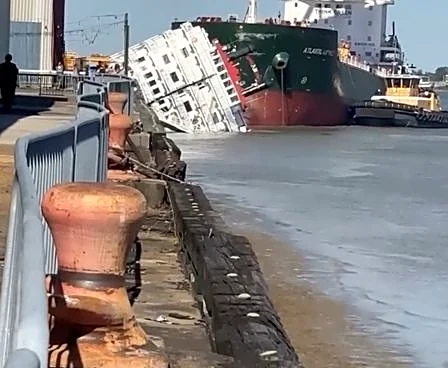
The incident occurred on Friday, November 13, 2026, near the Crescent City Connection bridge in New Orleans. According to NTSB Investigator in Charge Bart Barnum, a preliminary review of the tanker's voyage data recorder (VDR) indicates a steering casualty around 12:26 p.m., causing the ship's rudder to become stuck starboard. This directed the tanker towards the east bank of the river. The VDR also recorded audio consistent with warnings, requests for assistance, and emergency handling orders. The Atlantic Asphalt subsequently struck the docked American Heritage at approximately 12:28 p.m., leading to the capsizing of the cruise ship. All 191 passengers and crew on board the American Heritage were rescued, though 32 individuals were hospitalized, with six remaining hospitalized as of Sunday, November 15, 2026. New Orleans Mayor Helena Moreno stated that two of the hospitalized survivors were in serious but stable condition.
Why It's Important?
This incident highlights critical safety concerns within maritime transportation, particularly regarding the reliability of steering systems on large vessels operating in busy waterways like the Mississippi River. The NTSB's focus on both the cause of the failure and the successful rescue efforts underscores the importance of robust emergency protocols and the effectiveness of first responders. The collision's impact on the American Heritage, a passenger vessel, could lead to increased scrutiny of safety regulations for cruise ships and tankers operating in close proximity. For the maritime industry, this event may prompt a review of maintenance schedules, technological redundancies in steering systems, and crew training for emergency situations. The fact that all individuals were rescued, despite the capsizing of the cruise ship, will likely be a key point of analysis for improving future maritime safety and emergency response strategies, potentially influencing policy changes and operational guidelines for both cargo and passenger vessels.
What's Next?
The NTSB's investigation is ongoing, with a preliminary report expected next month. Investigators have downloaded over nine hours of data from the Atlantic Asphalt's VDR and are working to preserve evidence from the American Heritage. Interviews with passengers and crew from the American Heritage were conducted on Sunday, November 15, 2026, and interviews with the Atlantic Asphalt crew are scheduled to begin on Monday, November 16, 2026. NTSB Board Member John DeLeeuw indicated that the investigation will also examine the successful aspects of the response that prevented fatalities. American Cruise Lines, owner of the American Heritage, has praised its crew and first responders for their swift actions. City of New Orleans personnel are coordinating with American Cruise Lines to assist passengers and crew in returning home. The findings of the NTSB's preliminary and final reports will likely inform future safety recommendations and potentially lead to regulatory adjustments for maritime operations.
Beyond the Headlines
The incident raises broader questions about the increasing traffic and complexity of navigation on major U.S. waterways. The Mississippi River is a vital artery for both commercial shipping and tourism, and such collisions, while rare, underscore the inherent risks. The NTSB's decision to investigate 'what went right' in the rescue efforts could set new benchmarks for emergency preparedness and response in the maritime sector. This focus on positive outcomes, alongside identifying failures, could lead to a more holistic approach to safety investigations. Furthermore, the event may reignite discussions about the adequacy of current infrastructure, such as bridges and docking facilities, to accommodate modern vessel sizes and traffic volumes. The long-term implications could include enhanced technological requirements for vessel navigation and communication, as well as more stringent training and certification for maritime personnel to prevent similar incidents.