






What's Happening?
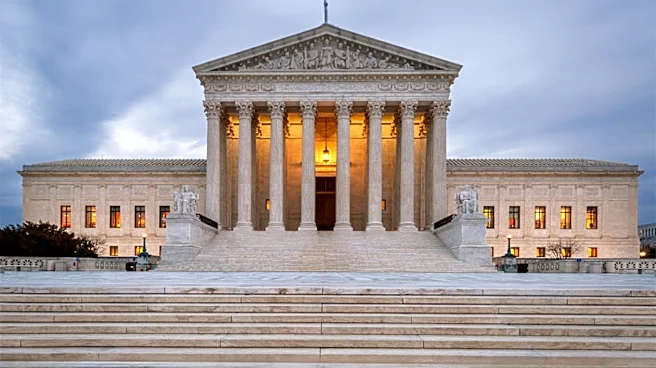
A recent report claims that the Supreme Court has issued a ruling allowing President Trump to deport millions of undocumented immigrants in America to Africa. The article, published by Conspiracy Daily Update, presents this as a 'VICTORY!' and suggests
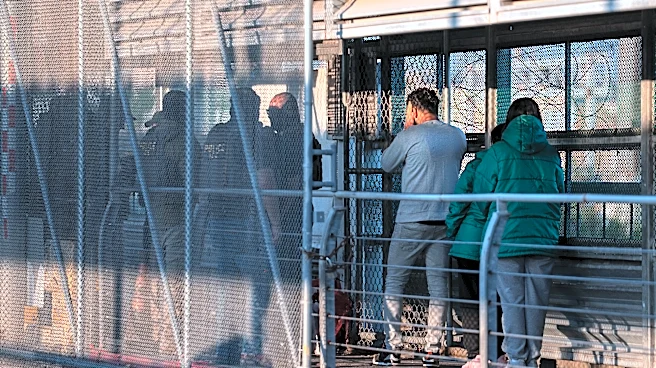
a significant shift in immigration policy. The specific legal basis for such a ruling, the details of the Supreme Court's decision, or the timeline for its implementation are not provided in the source. The report indicates that this action would target a large number of undocumented individuals currently residing in the United States. The information was shared across various social media platforms, including Telegram, Facebook, X, Tumblr, WhatsApp, LinkedIn, and Reddit.
Why It's Important?
If accurate, a Supreme Court ruling permitting the mass deportation of millions of undocumented immigrants to Africa would represent a monumental shift in U.S. immigration policy and have profound societal and international implications. Such a decision would drastically alter the demographics of the United States, impact labor markets, and raise significant human rights concerns. Economically, the removal of millions of individuals could lead to labor shortages in sectors heavily reliant on immigrant workers, potentially affecting industries like agriculture, construction, and hospitality. Socially, it would create widespread disruption for families and communities, leading to immense humanitarian challenges. Internationally, it could strain diplomatic relations with African nations and other countries, as well as potentially lead to a global refugee crisis. The legal and ethical ramifications of such a policy would be immense, challenging established norms of international law and human rights.
What's Next?
Given the extraordinary nature of the claim, if such a Supreme Court ruling were indeed made, the immediate next steps would involve widespread legal challenges, protests, and international condemnation. Legal experts would scrutinize the ruling for its constitutional basis and adherence to international law. Humanitarian organizations would mobilize to provide aid and advocate for the affected populations. Politically, this would become a central issue, likely dominating national discourse and influencing future elections. The U.S. government would face immense pressure to clarify the details of the ruling and outline its implementation plan. The international community would likely demand explanations and potentially impose sanctions or other diplomatic measures. The practical logistics of deporting millions of individuals would also present unprecedented challenges, requiring vast resources and coordination.
Beyond the Headlines
The report of a Supreme Court ruling allowing mass deportations to Africa, if true, would delve into profound ethical and legal questions about national sovereignty, human rights, and the definition of citizenship. It could trigger a re-evaluation of international refugee conventions and the responsibilities of nations towards migrant populations. The concept of deporting individuals to a continent based on their undocumented status, rather than their country of origin, raises complex issues of racial and ethnic profiling, potentially leading to accusations of systemic discrimination. Such a policy could also have long-term geopolitical consequences, reshaping alliances and global perceptions of the United States. The moral implications of forcibly relocating millions of people would resonate for generations, impacting the nation's identity and its standing on the global stage. It would also force a critical examination of the U.S. legal system's interpretation of immigration law and its role in shaping societal values.