







What's Happening?
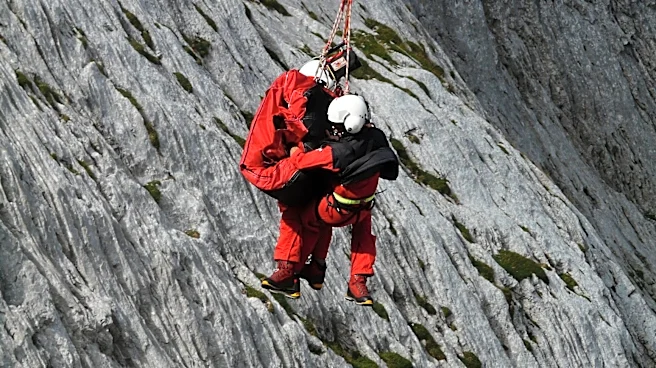
Federal agencies, including the National Park Service, U.S. Forest Service, U.S. Fish and Wildlife Service, and the Bureau of Land Management, have released new draft guidance allowing the use of fixed anchors in rock climbing. This decision aims to protect
established climbing routes across areas such as the Wind River Range in Wyoming and Rocky Mountain National Park in Colorado. Fixed anchors, which are permanent metal bolts or slings used by climbers for safety, were previously at risk of being restricted due to conservation concerns. The new guidance follows the Protecting America’s Rock Climbing Act passed in late 2024, which mandated the development of climbing policies. The guidance allows routes established before January 4, 2025, to be maintained indefinitely, although there are still uncertainties regarding the development of new routes.
Why It's Important?
The approval of fixed anchors is significant for the climbing community, as it ensures the preservation of established routes and addresses safety concerns. Climbers had previously feared that federal restrictions could lead to the removal of these anchors, which are crucial for safe descents. The decision reflects a balance between conservation efforts and recreational needs, as some conservationists argue that fixed anchors violate 'leave no trace' ethics. The new guidance provides a framework for managing climbing activities while allowing for public input, highlighting the importance of stakeholder engagement in federal policy-making. This development could influence future policies on outdoor recreational activities and conservation practices.
What's Next?
Public comments on the new guidance are open until August 14 for the National Park Service, Bureau of Land Management, and U.S. Fish and Wildlife Service, while the U.S. Forest Service's comment period ends in mid-July. The Access Fund, a climbing advocacy group, is urging federal agencies to align their definitions of fixed anchors and address technical details. The outcome of these public consultations could lead to varied policies across different parks and forests, depending on local decision-making. This process will be closely watched by both climbers and conservationists, as it may set precedents for how recreational and environmental interests are balanced in federal lands.