






What's Happening?
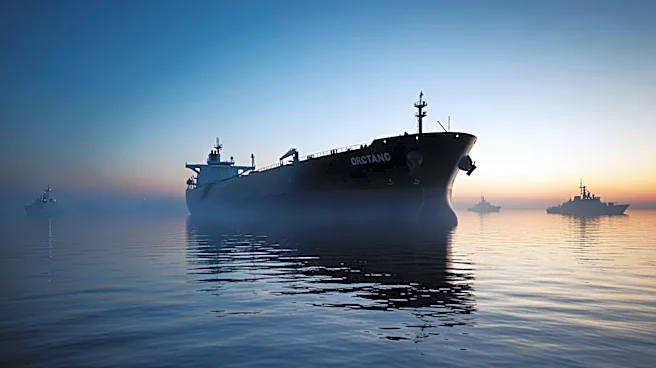
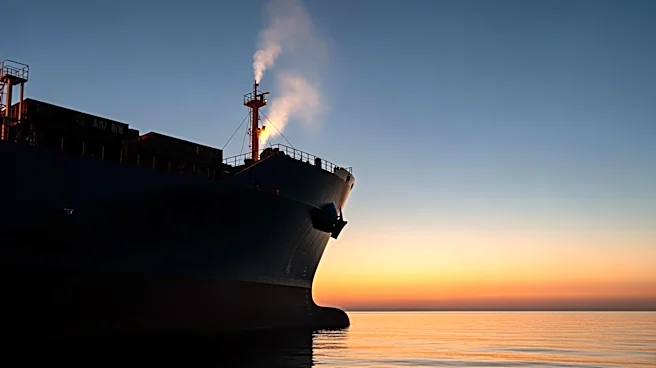
The U.S. military has disabled an Iranian oil tanker, the M/T Hasna, in the Gulf of Oman as part of an ongoing blockade of Iran's ports. The action was taken after the tanker ignored warnings to stop, leading to its rudder being disabled by cannon fire
from a U.S. Navy F/A-18 Super Hornet. This incident is part of broader tensions between the U.S. and Iran, with the blockade being a response to Iran's closure of the Strait of Hormuz. Diplomatic talks are ongoing to resolve the conflict, but military operations continue under the current ceasefire.
Why It's Important?
This development is significant as it reflects the ongoing geopolitical tensions in the Middle East, particularly concerning U.S.-Iran relations. The blockade and military actions have implications for global oil markets, potentially affecting fuel prices and economic stability. The situation also highlights the strategic importance of the Strait of Hormuz, a critical chokepoint for global oil shipments. The U.S. military's actions demonstrate its commitment to enforcing the blockade, which could escalate tensions if diplomatic efforts fail.
What's Next?
The continuation of diplomatic talks between the U.S. and Iran will be crucial in determining the future of the blockade and military engagements in the region. Both countries are under pressure to reach a resolution to prevent further escalation. The international community is likely to monitor the situation closely, given its potential impact on global energy supplies and regional stability. Any changes in the U.S. or Iranian stance could significantly alter the current dynamics.