





What's Happening?
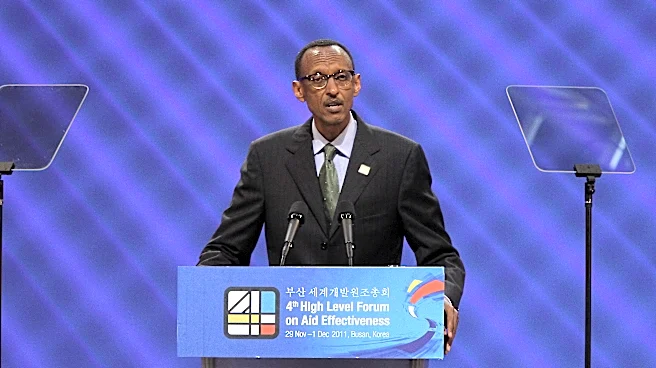
President Paul Kagame of Rwanda, accompanied by First Lady Jeannette Kagame, is undertaking a state visit to Cambodia. This visit aims to foster new avenues for cooperation between the two nations across various sectors, including trade, investment, aviation,
and tourism. The timing of the visit coincides with Cambodia's preparations to host the 20th Summit of the International Organisation of La Francophonie (OIF) in Phnom Penh on November 15 and 16. Rwanda and Cambodia have been progressively expanding their diplomatic and institutional cooperation, with several agreements already in place. These include a memorandum of understanding on financial sector development signed in April 2023, an agreement establishing bilateral consultations between their foreign ministries in November 2025, and a visa exemption agreement for diplomatic and official passport holders. Additionally, in May 2026, their central banks initiated a cross-border payment cooperation to facilitate electronic transactions and improve financial connectivity. President Kagame's current visit is expected to build upon these existing frameworks, with further agreements and cooperation documents anticipated to be signed.
Why It's Important?
This state visit signifies a strategic effort by both Rwanda and Cambodia to deepen their economic and diplomatic ties, potentially opening new markets and opportunities for businesses and institutions in both countries. The focus on trade, investment, aviation, and tourism indicates a mutual desire for economic diversification and growth. For Rwanda, strengthening relations with a Southeast Asian nation like Cambodia could provide access to new trade routes and investment capital, while also enhancing its global diplomatic footprint. For Cambodia, which achieved lower-middle-income status in 2015 and aims for high-income status by 2050, such partnerships are crucial for economic diversification, infrastructure improvement, and attracting foreign investment. The cross-border payment initiative, in particular, is significant as it aims to streamline financial transactions, thereby reducing barriers to trade and tourism and fostering greater economic integration between the two nations. The visit also underscores the growing importance of South-South cooperation in global affairs.
What's Next?
Following President Kagame's state visit, several agreements and cooperation documents are slated for signing, which will likely formalize and expand the scope of collaboration in trade, investment, aviation, and tourism. These agreements are expected to create concrete opportunities for businesses and institutions to forge partnerships and explore new markets. The visit's proximity to the 20th Summit of the International Organisation of La Francophonie (OIF) in Phnom Penh suggests that Rwanda and Cambodia may also seek to align on broader international cooperation initiatives, particularly within the Francophone community. Further developments could include increased direct flights between the two countries, targeted investment forums, and joint tourism promotion campaigns. The success of the cross-border payment system will also be closely monitored as a model for enhancing financial connectivity between developing economies.
Beyond the Headlines
The deepening relationship between Rwanda and Cambodia reflects a broader trend of emerging economies seeking to forge stronger bilateral ties outside traditional Western alliances. This South-South cooperation can lead to more diversified global trade networks and investment flows, potentially reducing reliance on established economic powers. The emphasis on digital transformation, as seen in Cambodia's Digital Economy and Society Policy Framework and the cross-border payment initiative, highlights a shared vision for leveraging technology to drive economic growth and improve public services. This collaboration could also serve as a model for other developing nations looking to enhance financial connectivity and digital infrastructure. Furthermore, the cultural exchange facilitated by increased tourism and diplomatic engagement can foster greater understanding and solidarity between African and Southeast Asian nations, contributing to a more multipolar global order.