









What's Happening?
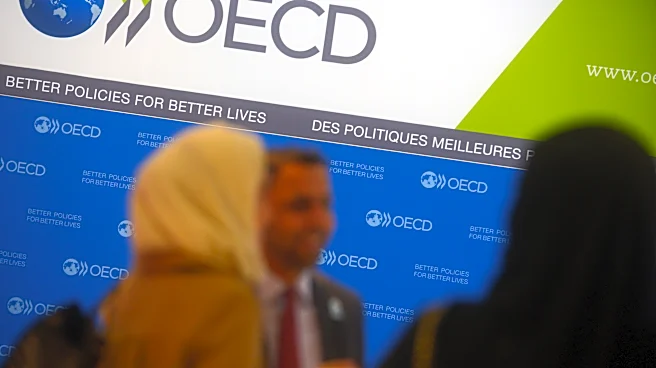
The Organisation for Economic Co-operation and Development (OECD) has advised Belgium to prioritize spending cuts and efficiency gains over tax increases to balance its national budget. In its biennial economic survey of Belgium, the OECD highlighted
that the country's already high tax levels necessitate a focus on expenditure restraint. The organization emphasized the urgency of fiscal consolidation due to increasing demands on public finances from an aging population, including pensions and healthcare, as well as higher defense spending. The OECD identified education, sickness and disability, health, and general public services as areas where Belgium's spending exceeds the eurozone average, suggesting these sectors for public sector reforms and spending reductions. The report also pointed out that Belgium's subsidies to companies are the highest as a share of GDP among OECD countries, recommending a review and potential reduction of these subsidies, particularly wage subsidies, to alleviate the tax burden on labor. Additionally, the OECD called for improved tax compliance and collection, noting Belgium's significant VAT compliance gap.
Why It's Important?
The OECD's recommendations carry significant weight for Belgium's economic stability and could influence future policy decisions. By advocating for spending cuts, the OECD is pushing for a more fiscally conservative approach, which could lead to austerity measures in public services. This could impact the quality and accessibility of education, healthcare, and other social programs, potentially leading to public discontent and political challenges, as evidenced by past protests in Brussels and Wallonia over budget deficit reduction efforts. The suggestion to reduce corporate subsidies, especially wage subsidies, could alter the business landscape, potentially affecting employment costs and corporate competitiveness. While intended to reduce the tax burden on labor, such changes could face resistance from businesses that rely on these subsidies. Furthermore, improving tax compliance, particularly regarding VAT, could significantly boost government revenue, but implementing stricter collection methods might pose administrative challenges and could be met with public scrutiny.
What's Next?
Belgium's government will likely face increased pressure to address its budget deficit in line with the OECD's recommendations. This could lead to intensified political debates and negotiations over where to implement spending cuts and how to reform public services. The recommendations for binding multi-year spending ceilings for all Belgian governments suggest a move towards more disciplined fiscal planning, which could be a key point of discussion in future budget cycles. Businesses may need to prepare for potential changes in subsidy policies, which could affect their operational costs and financial planning. Efforts to improve tax compliance, such as the introduction of mandatory e-invoicing and a VAT receipt lottery, are already underway and will continue to be implemented, with their effectiveness closely monitored. The political feasibility of these reforms, especially those impacting regional competencies like education, will be a critical factor in their successful implementation.
Beyond the Headlines
The OECD's intervention highlights a broader European trend where international bodies exert influence on national fiscal policies, particularly in countries facing budgetary pressures. This can lead to a tension between national sovereignty in policymaking and the recommendations of supranational economic organizations. The emphasis on reducing subsidies and improving tax compliance also reflects a global push towards greater fiscal efficiency and fairness, aiming to reduce market distortions and ensure equitable contributions to public finances. The report implicitly touches upon the complex federal structure of Belgium, where different levels of government have distinct budgetary responsibilities, making comprehensive fiscal reform a multifaceted challenge. The long-term implications could include a shift in Belgium's economic model, potentially leading to a more streamlined public sector and a re-evaluation of the role of government in supporting private enterprise.