
What's Happening?
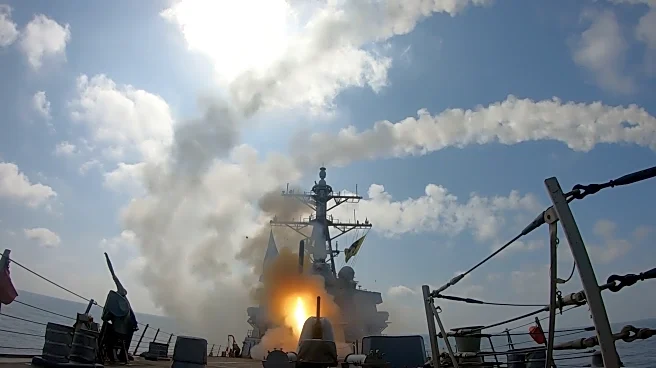
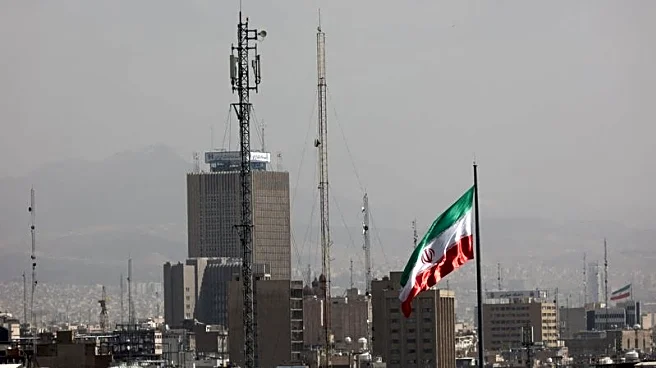
A coordinated attack by the United States and Israel on Iran has led to significant disruptions in air travel across the Middle East and beyond. The closure of airspace by several countries, including Israel, Qatar, Syria, Iran, Iraq, Kuwait, and Bahrain,
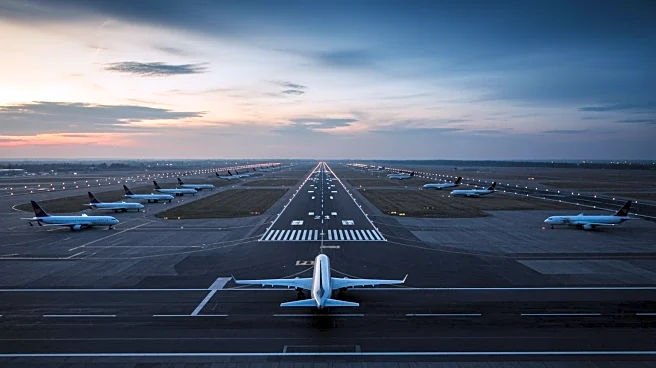
has resulted in the cancellation of over 1,800 flights. Major hub airports in Dubai, Abu Dhabi, and Doha have halted operations, affecting hundreds of thousands of travelers. Airlines such as Emirates, Qatar Airways, and Etihad, which typically handle about 90,000 passengers daily, have been forced to reroute or cancel flights. The situation has left many passengers stranded or diverted to other airports, with some flights taking significantly longer routes to avoid conflict zones.
Why It's Important?
The disruption in air travel has significant implications for the global aviation industry, potentially leading to increased operational costs and higher ticket prices. Airlines are facing challenges in rerouting flights, which may result in longer travel times and additional fuel consumption. The closure of airspace also impacts air traffic control operations, particularly in Saudi Arabia, which may experience increased pressure to manage rerouted flights safely. The economic impact extends to countries that rely on overflight fees, which they will miss out on during the airspace closures. The situation underscores the vulnerability of global travel networks to geopolitical conflicts and the cascading effects on international travel and commerce.
What's Next?
In the coming days, countries may begin to reopen parts of their airspace as the situation stabilizes and more information becomes available about the conflict's impact on flight safety. Airlines are likely to continue issuing waivers to affected travelers, allowing them to rebook without additional fees. However, the duration of the disruption remains uncertain, with comparisons drawn to a previous U.S.-Israel attack on Iran that lasted 12 days. Travelers are advised to stay informed about their flight status and be prepared for potential delays or cancellations as the situation evolves.