








What's Happening?
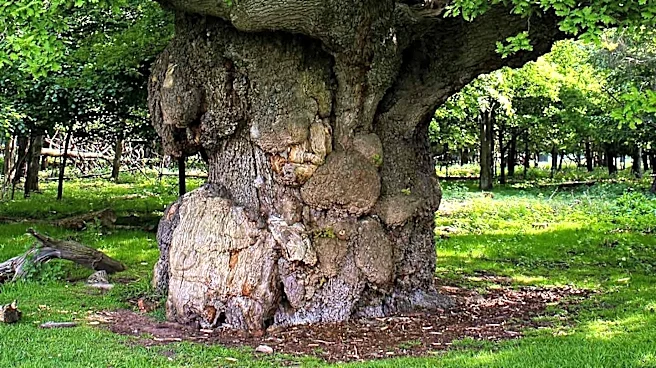
The Woodland Trust has announced the shortlist for the UK's Tree of the Year 2026, featuring ten contenders that highlight nature's resilience. Among the nominees are trees that have survived significant historical events and environmental challenges,
such as the 'Bomber Oak' in Rutland, which was struck by a WWII bomber, and the 'Crowhurst Yew' in East Sussex, which survived a Civil War cannonball. Public voting is open until late September, with the winner representing the UK in the European Tree of the Year finals. The competition aims to raise awareness of rare, ancient, or at-risk trees.
Why It's Important?
The Tree of the Year competition underscores the importance of preserving and celebrating the UK's natural heritage. By highlighting trees that have withstood historical and environmental challenges, the Woodland Trust aims to foster public appreciation and support for conservation efforts. The competition also draws attention to the ecological and cultural significance of these trees, encouraging communities to engage with and protect their local natural environments. The stories of resilience associated with these trees serve as powerful symbols of nature's ability to endure and adapt.
What's Next?
Following the public voting period, the winner of the UK's Tree of the Year will be announced in early October. This tree will then compete in the European Tree of the Year finals, further promoting awareness of the UK's unique natural heritage on an international stage. The competition is expected to inspire increased public interest in tree conservation and may lead to enhanced protection measures for the nominated trees and others like them across the country.