
What's Happening?
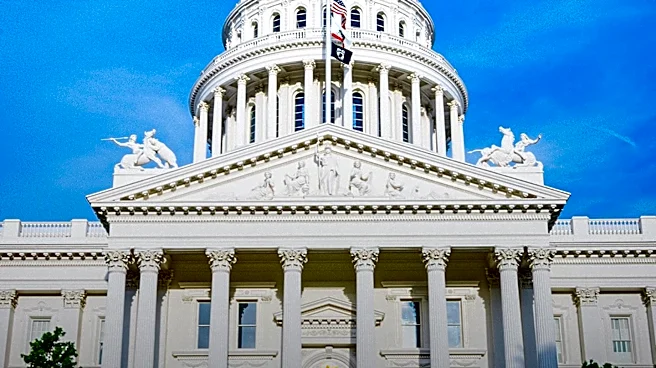
The California Senate has approved a bill that would impose fines on content creators who fail to disclose paid political posts. This legislation, authored by Democratic Assemblymember Marc Berman, aims
to strengthen existing laws in California and Texas that already require such disclaimers. The bill seeks to enhance enforcement by granting the state’s Fair Political Practices Commission (FPPC) the authority to directly fine influencers and political committees up to $5,000 per violation. This change would allow the FPPC to bypass the lengthy court order process currently required to compel disclosure. The bill now awaits a final vote in the Assembly before potentially reaching Democratic Governor Gavin Newsom’s desk for signature or veto by the end of September. Assemblymember Berman emphasized that voters have a right to know if the political messaging they encounter is paid for by campaigns.
Why It's Important?
This legislative effort is significant for several reasons, primarily concerning transparency in political advertising and the evolving landscape of digital media. The rise of social media influencers has created a new, often unregulated, channel for political messaging, making it difficult for the public to discern genuine endorsements from paid promotions. By empowering the FPPC to issue direct fines, California aims to create a more immediate and effective deterrent against undisclosed political advertising. This could set a precedent for other states and potentially influence federal discussions on similar disclosure requirements, as federal efforts to pass such legislation have yet to advance. The bill addresses concerns about the integrity of political discourse and ensures that citizens are aware of the financial interests behind the political content they consume, thereby fostering a more informed electorate. This move could impact the strategies of political campaigns and the business models of content creators involved in political advocacy.
What's Next?
The bill will proceed to a final vote in the California Assembly. If approved there, it will then be sent to Democratic Governor Gavin Newsom, who has until the end of September to either sign it into law or veto it. Should the bill be enacted, the Fair Political Practices Commission will gain new powers to enforce disclosure requirements for paid political posts by content creators. This could lead to increased scrutiny of influencer marketing in political campaigns and potentially result in fines for those who do not comply. Political committees and content creators engaging in political advocacy in California will need to adapt their practices to ensure full transparency regarding paid endorsements. The outcome in California may also influence ongoing federal discussions, such as the bill introduced by Senator Adam Schiff, regarding disclosure requirements for influencers in political contexts.
Beyond the Headlines
The California bill highlights a broader societal challenge: distinguishing authentic content from sponsored messaging in the digital age, particularly within the sensitive realm of politics. The legislation touches upon ethical considerations regarding influence and persuasion, as undisclosed paid posts can manipulate public opinion without accountability. It also underscores the growing power of content creators as significant actors in political discourse, moving beyond traditional media outlets. The legal implications extend to defining what constitutes a 'paid political post' and how enforcement can effectively keep pace with rapidly evolving digital platforms and content formats. This development could lead to a re-evaluation of journalistic ethics in the context of new media and potentially reshape how political campaigns engage with digital personalities, pushing for greater transparency and integrity in online political communication.