







What's Happening?
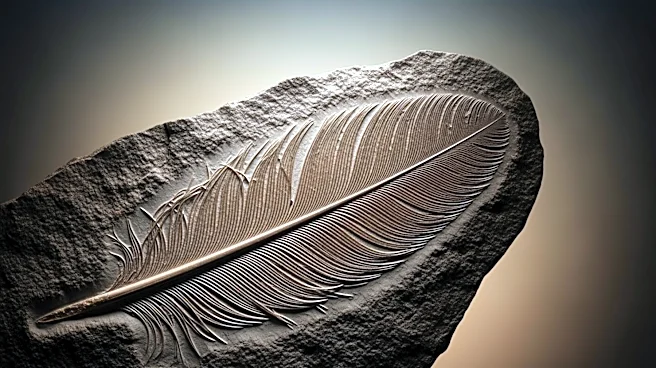
In 1996, a fossil discovered in China provided the first confirmed evidence of a dinosaur with feathers, challenging previous assumptions about dinosaur evolution. Canadian paleontologist Philip Currie was among the first to study the specimen, which
sparked significant scientific debate. The fossil suggested that some dinosaurs may have evolved into modern birds, a theory that was controversial at the time due to the lack of concrete evidence. The discovery highlighted the challenges faced by Western researchers in accessing Chinese fossils during that period.
Why It's Important?
The discovery of a feathered dinosaur fossil has significant implications for our understanding of evolutionary biology. It supports the theory that birds are the descendants of theropod dinosaurs, reshaping the scientific narrative of how modern birds evolved. This finding has influenced subsequent paleontological research and has led to a reevaluation of the characteristics that define dinosaurs and birds. It also underscores the importance of international collaboration in scientific research, as access to global fossil records is crucial for advancing knowledge.
What's Next?
The discovery has paved the way for further research into the evolutionary link between dinosaurs and birds. Scientists continue to explore the diversity of feathered dinosaurs and their evolutionary adaptations. Ongoing excavations and technological advancements in fossil analysis are expected to provide deeper insights into the evolutionary history of birds and other species.
Beyond the Headlines
The fossil discovery highlights the dynamic nature of scientific inquiry, where new evidence can challenge established theories and lead to paradigm shifts. It also emphasizes the role of paleontology in understanding the broader narrative of life on Earth, offering insights into how species adapt and evolve over time.