
What's Happening?
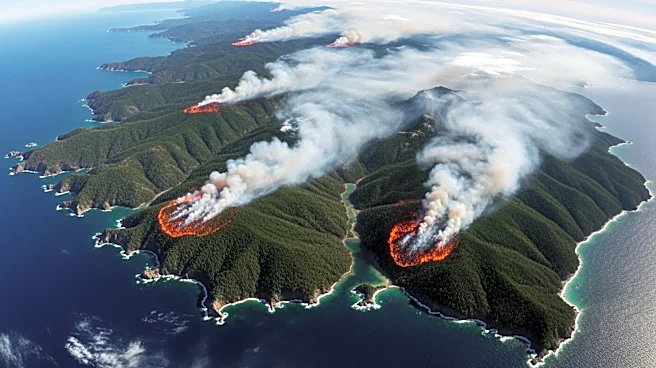
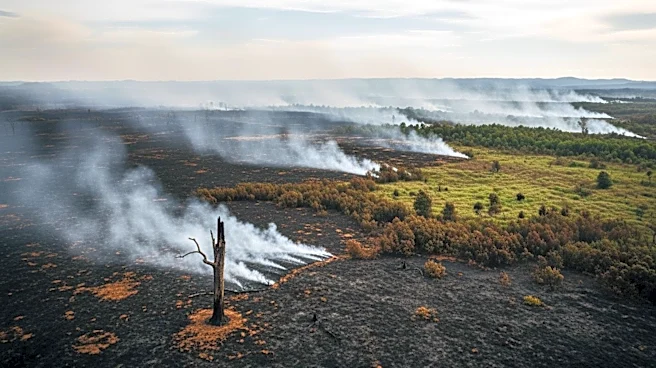
A fire on Santa Rosa Island, part of the Channel Islands National Park, has raised concerns about the potential loss of unique flora and fauna. The fire, now fully contained, burned through a third of the island,
affecting areas home to endangered species like the Torrey pine and the Hoffmann’s slender-flowered gilia. The cause of the fire is under investigation, with initial reports suggesting it may have been sparked by a shipwrecked sailor. Scientists and conservationists are assessing the fire's impact, with concerns about the long-term effects on the island's ecosystem, including the proliferation of non-native grasses that could hinder native plant recovery.
Why It's Important?
The fire highlights the vulnerability of isolated ecosystems like Santa Rosa Island, which hosts species found nowhere else. The potential loss of biodiversity underscores the importance of conservation efforts and the challenges posed by climate change and human activity. The incident serves as a reminder of the delicate balance required to maintain such ecosystems and the need for proactive measures to prevent and mitigate environmental damage. The fire's impact on the island's unique species could have broader implications for conservation strategies and policies aimed at protecting similar habitats.
What's Next?
Specialists are beginning assessments to determine the full extent of the fire's impact and to plan recovery efforts. Conservation groups, such as the Santa Barbara Botanic Garden, are prepared to assist with restoration, including replanting rare species if necessary. The incident may lead to increased efforts to protect the island from future fires and to address the challenges posed by non-native species. The findings from these assessments could inform future conservation strategies and highlight the need for increased funding and resources to support ecosystem recovery.