







What's Happening?
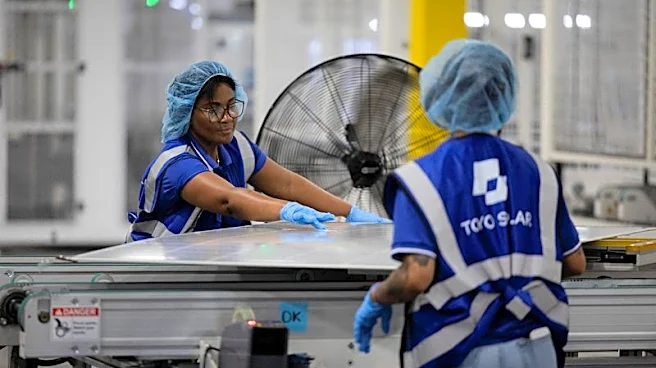
Many U.S. companies are offering on-the-job training (OJT) and paid apprenticeships across various sectors, including construction, healthcare, manufacturing, logistics, and clean energy. This approach allows individuals to acquire work skills while performing
job duties, often with guidance from experienced colleagues. OJT can range from short-term informal learning to multi-year registered apprenticeships that include structured curricula and nationally recognized credentials. More than half of participants in registered apprenticeship programs are over 25, indicating that these opportunities are not limited to entry-level workers. Staffing agencies, such as Kelly, play a significant role in connecting job seekers with employers who provide training, particularly in manufacturing and warehousing. These programs aim to address the demand for skilled workers in industries that do not always require a four-year degree, providing an alternative pathway to career development and employment.
Why It's Important?
This trend is crucial for the U.S. economy as it addresses critical labor shortages and provides accessible career pathways for individuals without traditional four-year degrees. Industries like construction, healthcare, manufacturing, logistics, and clean energy are experiencing high demand for workers, and OJT and apprenticeships offer a practical solution to upskill the workforce. For employees, these programs provide an opportunity to earn a wage while learning, reducing the financial burden often associated with education. For businesses, investing in employee development through OJT can lead to increased productivity, the acquisition of new skills within the team, and improved employee morale and retention. This model helps bridge the gap between employer needs and available talent, fostering a more skilled and adaptable workforce that can meet evolving industry demands.
What's Next?
The continued expansion of on-the-job training and apprenticeship programs is expected, driven by ongoing demand for skilled labor in key U.S. industries. Government resources, such as the Department of Labor's website and Apprenticeship.gov, will likely continue to serve as central hubs for individuals seeking these opportunities. Employers are anticipated to further refine their training programs, focusing on practical, skill-based learning that directly addresses their operational needs. The role of staffing agencies in facilitating these connections is also likely to grow. As more individuals recognize the value of earning while learning, these programs could become an increasingly popular and effective alternative to traditional higher education, potentially influencing future workforce development strategies and educational models across the country.
Beyond the Headlines
The rise of earn-while-you-learn models challenges traditional notions of career entry and professional development. It highlights a shift towards valuing practical skills and on-the-job experience as much as, if not more than, formal academic qualifications in certain sectors. This approach can foster greater economic inclusivity by providing opportunities for individuals from diverse backgrounds, including those who may not have access to higher education. It also encourages a culture of continuous learning within organizations, where skill development is an ongoing process integrated into daily work. The long-term implications could include a more dynamic and responsive labor market, where workers can adapt more quickly to technological advancements and changing industry needs, ultimately strengthening the overall economic resilience of the U.S.