






What's Happening?
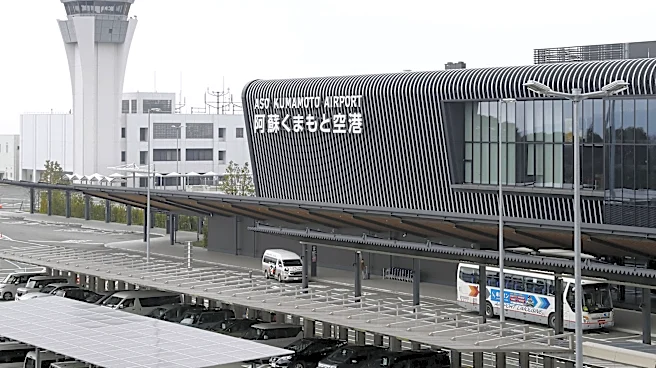
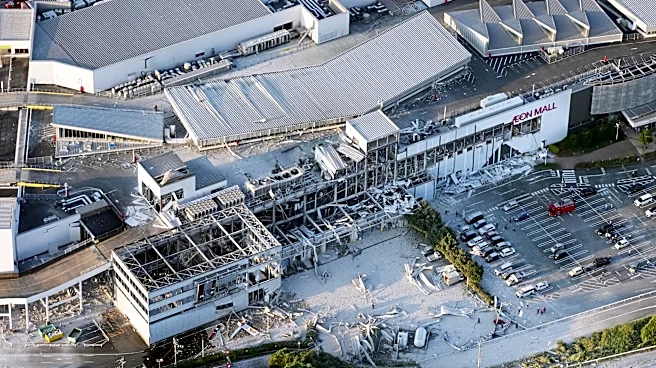
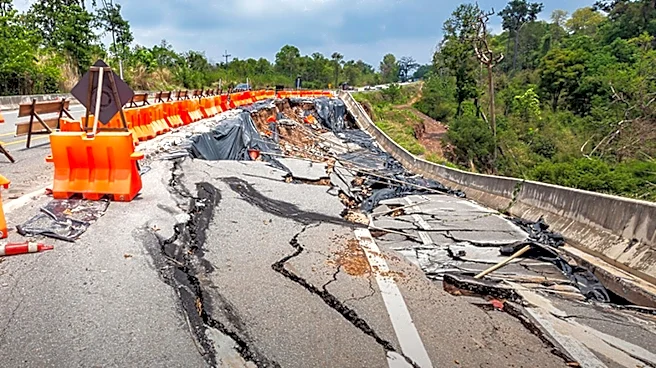
On July 28, 2026, a powerful 7.1-magnitude earthquake struck Japan's Kyushu island, causing significant damage and injuries. The earthquake, which had a shallow depth of 6.2 miles, resulted in at least 50 injuries, collapsed buildings, damaged roads,
fires, and power outages. Major companies like Sony and TSMC evacuated their employees and assessed the safety of their facilities. The earthquake was the country's most intense since 2024, reminiscent of the devastating 9.1-magnitude disaster in 2011 that led to nearly 20,000 deaths and massive tsunami waves. The government issued warnings for additional strong aftershocks and urged residents to remain vigilant.
Why It's Important?
The earthquake highlights Japan's vulnerability to seismic activity due to its location on the Pacific Ring of Fire, where tectonic plates frequently shift. This event underscores the ongoing need for robust disaster preparedness and infrastructure resilience in Japan. The impact on major companies like Sony and TSMC could have broader economic implications, potentially affecting global supply chains. Additionally, the earthquake serves as a reminder of the importance of emergency response systems and the need for continuous improvement in disaster management strategies.
What's Next?
Authorities are likely to focus on rescue and recovery efforts in the immediate aftermath, with a priority on locating missing persons and providing medical care to the injured. The government may also conduct a thorough assessment of infrastructure damage to prioritize repairs and ensure public safety. In the longer term, Japan may review and update its building codes and disaster preparedness plans to mitigate the impact of future seismic events. The international community may offer support and assistance, highlighting the importance of global cooperation in disaster response.