
What's Happening?
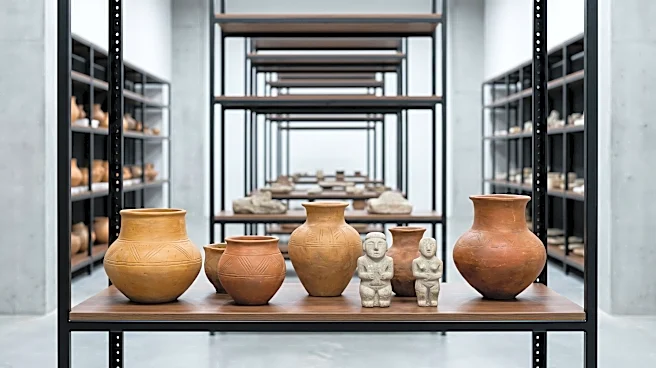
Syrian archaeologists, led by Maamoun Abdulkarim, former director-general of Syria's Directorate-General of Antiquities and Museums (DGAM), successfully rescued approximately 30,000 priceless artifacts from the Deir ez-Zor Museum during 2014 and 2015.
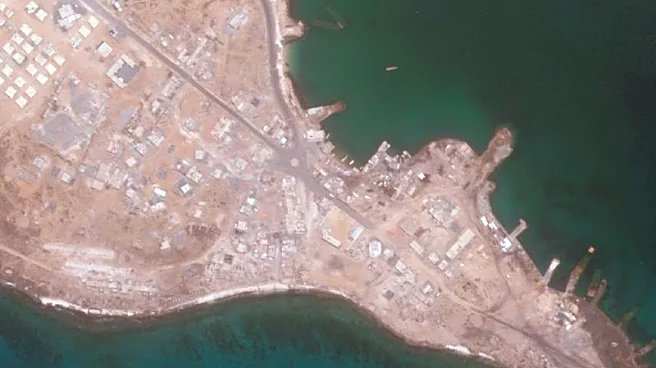
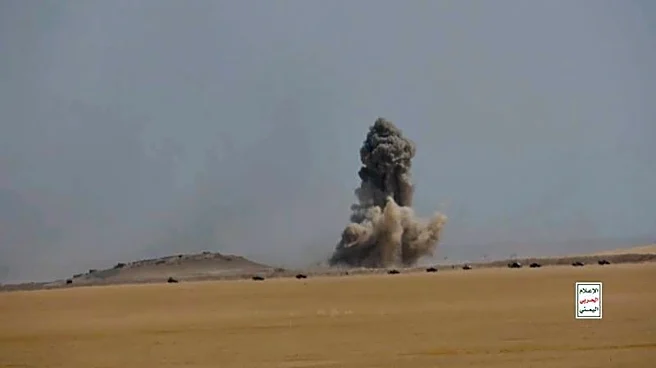
This operation occurred as the city faced imminent capture by the Islamic State of Iraq and Syria (ISIS), also known as Daesh. Deir ez-Zor, located on the Euphrates River near Iraq's border, is a strategically important region due to its oil and gas fields, making it a fiercely contested battleground during the Syrian civil war. The rescue mission involved significant risks, as access to the museum was severely restricted and connected to the military airport via a vulnerable corridor. Abdulkarim's study, published in Museum Management and Curatorship, highlights this effort as a critical case study in protecting cultural heritage during wartime, emphasizing the institutional resilience and rapid adaptation required in such circumstances. This rescue was part of a larger effort that saw approximately 300,000 museum artifacts relocated to secure sites across Syria between 2012 and 2017.
Why It's Important?
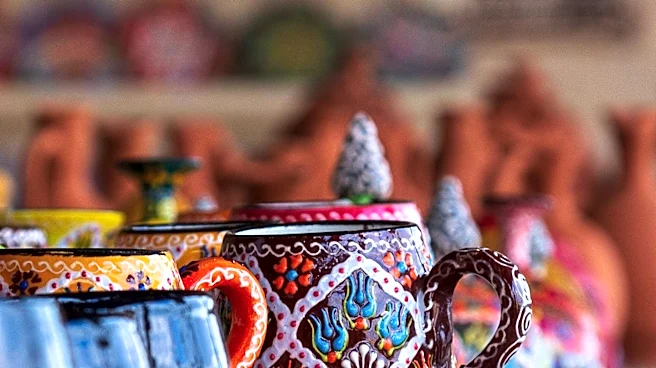
The successful rescue of 30,000 artifacts from the Deir ez-Zor Museum underscores the global importance of cultural heritage preservation, especially in conflict zones. These artifacts represent thousands of years of human history and are integral to the identity and memory of communities in the Euphrates region. Their preservation prevents their destruction, looting, and illicit trafficking, which became rampant during ISIS's expansion in Syria and Iraq. The incident serves as a stark reminder of the vulnerability of cultural sites during armed conflicts and the critical need for proactive measures. The lessons learned from this operation, particularly regarding decision-making under uncertainty and the importance of trust among colleagues, can inform future heritage protection strategies worldwide. The international community, including U.S. organizations and policymakers, often supports efforts to combat illicit trafficking of antiquities, recognizing that such trade can fund terrorist activities and destabilize regions. This event highlights the dedication of local professionals in safeguarding shared human heritage against overwhelming odds.
What's Next?
The study by Maamoun Abdulkarim provides valuable insights for future heritage protection efforts in conflict zones. It emphasizes the need for embedding risk management within everyday heritage management rather than reacting only after a crisis begins. This suggests a potential shift towards more proactive and integrated approaches to cultural heritage preservation globally. International organizations and governments may review and adapt their policies and funding mechanisms to support such preventative measures and rapid response capabilities. Furthermore, the ongoing efforts to combat illicit trafficking of artifacts will likely continue, with increased focus on international cooperation and intelligence sharing to prevent the sale of looted items. The experience from Deir ez-Zor could also lead to enhanced training programs for archaeologists and museum professionals in conflict-affected regions, equipping them with the skills and resilience needed for emergency operations. The long-term goal will be to ensure that the foundations for effective emergency action, such as strong relationships, meticulous documentation, and professional capacity, are established during periods of stability.
Beyond the Headlines
The rescue operation in Deir ez-Zor transcends the immediate act of saving objects; it highlights the profound ethical and cultural dimensions of preserving collective memory. Abdulkarim's assertion that "We did not rescue 30,000 objects simply to save 30,000 museum pieces. We were protecting thousands of years of memory that war threatened to erase" speaks to the deeper significance of cultural heritage. The destruction of cultural sites and artifacts by groups like ISIS is not merely collateral damage but often a deliberate act aimed at erasing identity and history, thereby undermining social cohesion and future reconciliation. This event underscores the role of cultural heritage as a non-renewable resource that embodies human civilization and identity. The courage of the Syrian archaeologists in risking their lives for these artifacts reflects a universal human impulse to protect and transmit heritage across generations. It also brings to light the complex interplay between conflict, cultural destruction, and the resilience of human spirit in safeguarding what defines us.